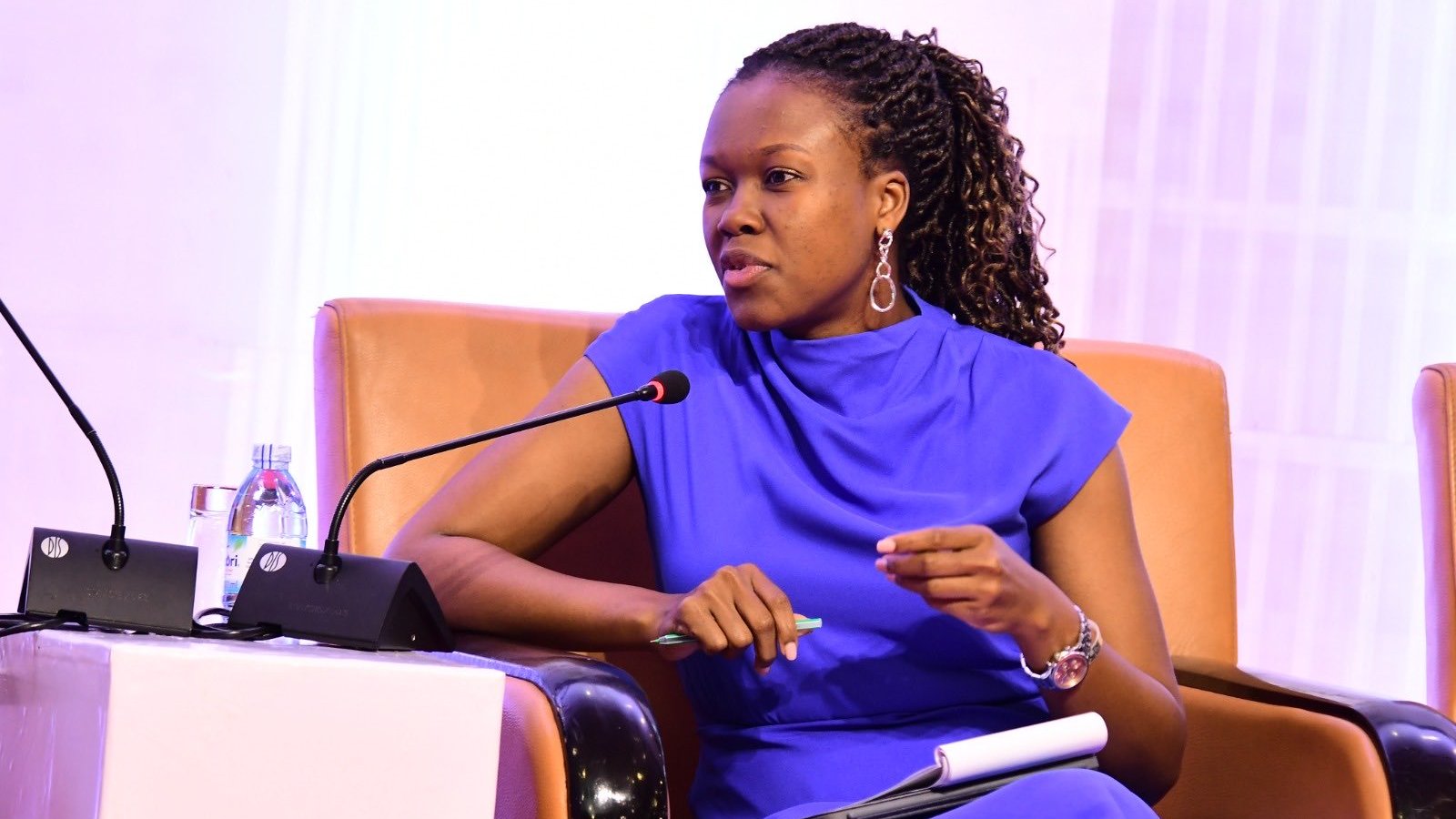
Uganda’s Shadow Minister for Public Service, Anna Adeke Ebaju, has stirred debate with a bold proposal to reduce the size of Parliament and disentangle Cabinet appointments from legislative roles.
The suggestions are contained in the Alternative Policy Statement for the Public Service Sector for FY2025/26, presented last week.
Adeke, who also serves as the Soroti District Woman Representative, recommends that each district be represented by only two Members of Parliament, one male and one female to to streamline representation and reduce the financial burden on taxpayers.

Uganda currently has over 500 MPs, a number she says is unsustainable given the country’s economic situation.
“Our Parliament is bloated. In countries like India and Nigeria, MPs represent far more citizens than in Uganda, yet those countries have significantly larger populations,” Adeke noted.
“We must re-evaluate the cost-effectiveness of our current structure.”
According to the latest data from the Parliamentary Commission, Uganda’s Parliament had 557 MPs as of 2024.
This number is projected to rise further with the creation of new administrative units and special interest seats.
By contrast, India has roughly 545 MPs representing over 1.4 billion people, while Nigeria’s National Assembly has fewer than 500 lawmakers for a population of over 220 million.
Adeke argues that Uganda’s ratio of representation is unjustifiably low and contributes to high administrative costs in the Public Service sector.
“Reducing the number of MPs will not only rationalize public expenditure but also improve the efficiency and quality of parliamentary debates and oversight,” she said.
In addition, Adeke is pushing for a constitutional amendment to bar MPs from serving concurrently as Cabinet Ministers, a move she says would strengthen parliamentary independence and oversight functions.
“We strongly propose that cabinet ministers should not be MPs. If an MP is appointed to the cabinet, they should resign their parliamentary seat before assuming ministerial duties,” she stated.
Adeke argued that the dual roles compromise the doctrine of separation of powers and create inherent conflicts of interest.
“The legislature is expected to provide oversight and hold the Executive accountable. It is contradictory for MPs to perform checks and balances on a government they themselves are part of,” she explained.
Attached is the full copy of the Statement; Alternative-Policy-Statement-Public-Service-Sector
About Author