
Uganda’s President Yoweri Kaguta Museveni has revealed that the long-awaited Cattle Restocking and Rehabilitation Program, aimed at rebuilding the livestock wealth of communities in northern and eastern Uganda, will be rolled out gradually over a period of three to four years.
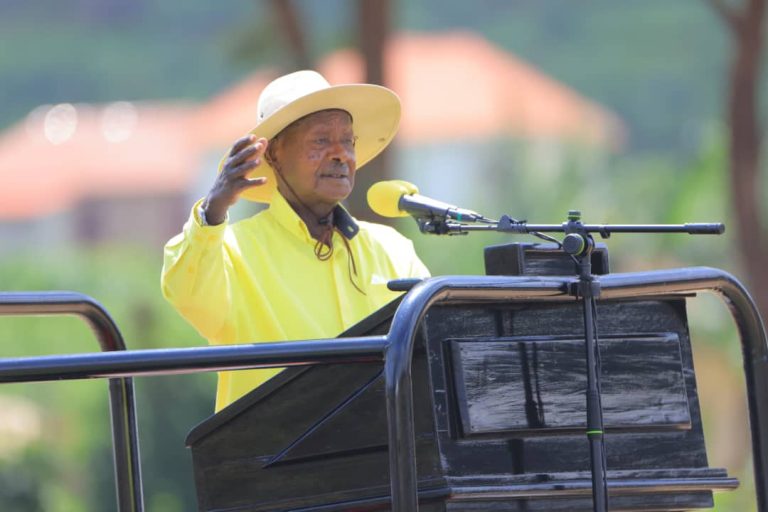
Speaking during a media engagement at Soroti State Lodge on Tuesday night, the President explained that government had reached a consensus on the need to reintroduce cattle to affected sub-regions such as Teso, Lango, and Acholi, but emphasized that implementation will require careful planning and adequate budgeting.
“We are discussing it in government, and I have informed the Cabinet that the people have supported my idea. So, the government will now plan, plan the money, plan the budget,” Museveni said.
“I am glad that at the community level and at my level, we have all agreed. I am now going to involve the whole government. They will plan. It will not be implemented in just one season; it may take three to four years to be implemented.”
The President noted that the program will be delivered in phases or installments, taking into account the large number of households that need to be supported and the substantial resources required to restore the livestock economy across northern Uganda.
According to Museveni, the restocking initiative targets more than one million households across the sub-regions of Teso, Lango, and Acholi, areas that suffered massive cattle losses during years of insurgency and cattle rustling.
“You see, the homesteads from Lango, Acholi, and Teso are more than one million households. If you say five cows per household, that’s a lot of money. The government will plan now, it can’t be done at once,” he said.
Museveni explained that the phased approach will ensure accountability, transparency, and sustainability in the implementation process, while also allowing the government to align the program with other ongoing national development priorities.
He added that the plan represents a continuation of his long-standing commitment to rebuilding the economic foundation of the north and east, which were among the regions most affected by cattle rustling, displacement, and prolonged instability in past decades.
“If we had started 10 years ago, we would have finished by now. But the important thing is that we have agreed to move forward,” he remarked.
The cattle restocking initiative has been one of the most discussed topics during Museveni’s ongoing campaign and development tours in Teso and neighboring sub-regions.
During a recent rally in Kapelebyong District, the President announced his proposal to distribute five cows per household as a practical step to restore livelihoods and rebuild family wealth.
The announcement was met with widespread excitement across Teso, where communities continue to recover from the loss of hundreds of thousands of cattle during the cattle rustling era of the 1980s and 1990s.
Museveni said the upcoming program will not only focus on giving out cows but will also include a broader plan for livestock management, veterinary support, pasture development, and market access to ensure that beneficiaries can productively grow and sustain their herds.
“This is not just about giving out animals; it is about rebuilding a sustainable cattle economy,” the President emphasized.
“We are looking at milk, meat, and breeding opportunities so that every family can earn a living and contribute to Uganda’s wealth creation agenda.”
The President linked the restocking effort to existing government initiatives such as the Parish Development Model (PDM) and Emyooga, both of which aim to push Ugandans into the money economy through enterprise development at the grassroots.
He noted that integrating livestock distribution with PDM structures would help ensure that the program reaches genuine beneficiaries, reduces duplication, and strengthens local accountability.
“Through PDM and other programs, we already have local structures that can help identify who should benefit. We must avoid misuse and ensure that these cows go to families who will look after them and multiply them,” Museveni said.
While the President did not disclose the total budget estimate, government sources have indicated that the program could require billions of shillings to reach full coverage.
Museveni, however, said the focus is on proper sequencing and effective use of resources rather than rushing implementation.
“This is a big project. We must plan well so that what we start, we finish successfully. Uganda is now peaceful, and we can plan development properly without panic,” he stated.
Local leaders and community representatives from Teso and Lango have welcomed the President’s announcement, describing it as a long-overdue move that will rejuvenate rural economies and strengthen household incomes.
Kapelebyong District Chairperson, Mr. Akorikin Francis, said the gradual rollout plan makes sense, given the financial implications of covering such a large population.
“We are happy that the President is not just making promises but is thinking through the implementation. Even if it takes four years, it will transform our communities when it starts,” Akorikin said in Kapelebyong.
However, some leaders called for transparency and fair distribution once the program starts, warning against corruption and favoritism that have undermined similar initiatives in the past.
About Author