As Uganda inches closer to the 2026 general elections, journalists in the Teso sub-region have received a timely boost in their preparedness to navigate an increasingly complex and hostile digital environment.
This comes after Teso News Network (TNN) partnered with the Human Rights Network for Journalists–Uganda (HRNJ-Uganda) to provide intensive digital safety and resilience training for media practitioners across the region.

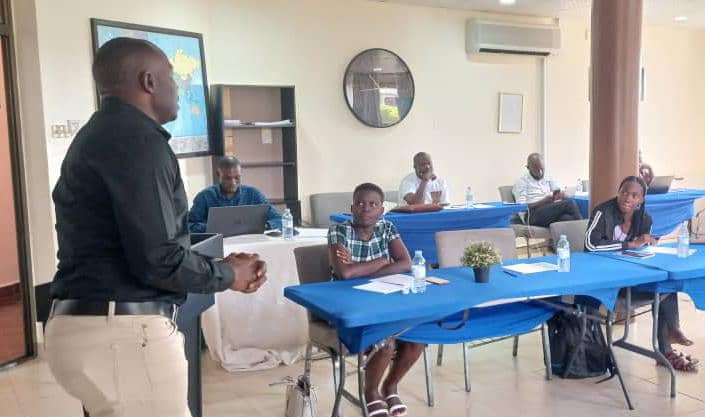
The training, held at Hursey Resort in Soroti City, convened reporters, editors, and media owners from radio, print, and online platforms, with the goal of strengthening their ability to operate safely in both physical and digital spaces.

The initiative forms part of a broader effort under the Digital Resilience Network, a global program supporting civil society organizations across the Global South.
The network focuses on enhancing digital resilience, promoting best practices in online safety, and fostering a culture of responsible and secure journalism.

According to HRNJ-Uganda Executive Director Robert Ssempala, the training was designed to ensure journalists are well-equipped to handle the growing risks of digital surveillance, online harassment, and cyber attacks that often accompany election seasons.
“This training is part of a national campaign to prepare journalists for the election environment,” Ssempala said. “We want to make sure that as they report on sensitive political issues, they remain protected, both online and offline.”
Ssempala emphasized that digital security is now an integral part of journalism, especially as political actors increasingly use digital platforms to disseminate propaganda, manipulate narratives, or target independent voices.
“Digital safety is not optional anymore, it’s a survival skill,” he added.
Julius Esegu, Chairperson of HRNJ-Uganda, echoed Ssempala’s remarks, reaffirming the organization’s long-standing commitment to defending press freedom and strengthening journalists’ resilience in times of uncertainty.
“We must build our capacities in preparation for the elections,” Esegu said. “We are engaging editors, media owners, and frontline reporters to strategize on how to stay safe without compromising journalistic integrity.”
He recalled the harrowing experiences of journalists during previous election cycles, particularly the violent incidents in Kawempe, where several reporters were assaulted, arrested, and detained while covering opposition rallies.
“Many journalists were so traumatized they couldn’t even report what happened. Some media houses withdrew their reporters entirely from the field. If such conditions recur, we cannot speak of free, fair, or transparent elections,” Esegu noted.
During the training, participants engaged in practical sessions on password protection, data encryption, digital hygiene, social media safety, and risk assessment.
They also shared experiences of harassment, confiscation of equipment, and online attacks, underscoring the urgency of such interventions.
Many called for the provision of protective equipment, including armoured press jackets and digital tools to shield their online identities and sensitive data.
In response, HRNJ-Uganda announced plans to procure 150 armoured vests for distribution to journalists during the election season, an initiative welcomed with applause from participants.
“This move demonstrates HRNJ’s commitment to the safety of media professionals who risk their lives to tell the truth,” said Emmanuel Olinga a freelance Journalist from Katakwi FM. “We need both physical and digital protection to carry out our duties effectively.”
Esegu, in his closing remarks, likened HRNJ-Uganda to a giraffe, an animal that “sees far and prepares early.”
“We keep projecting, not just within those we have already reached, but also those we are yet to impact. Every time, we bring in new faces to ensure the next generation of journalists is better equipped to withstand threats,” he said.
The participants described the training as a timely and empowering initiative, noting that it not only equipped them with technical skills but also restored solidarity and confidence among journalists who often feel isolated in the face of intimidation.
“We now understand how to identify digital threats, manage our data securely, and protect our sources,” said a female journalist from Serere. “It’s reassuring to know that organisations like HRNJ-Uganda and Teso News Network are standing with us.”
With memories of past election-related violence still vivid, HRNJ-Uganda’s proactive approach is being hailed as a major step towards ensuring press freedom, transparency, and credible journalism during Uganda’s 2026 elections.
The organization pledged to continue engaging journalists nationwide through more training sessions, dialogue platforms, and safety campaigns ahead of the polls.
“We shall not relent,” Ssempala reaffirmed. “A free press is the foundation of democracy. When journalists are safe, society is informed, and elections become more transparent.”
About Author