By Emmanuel Olinga
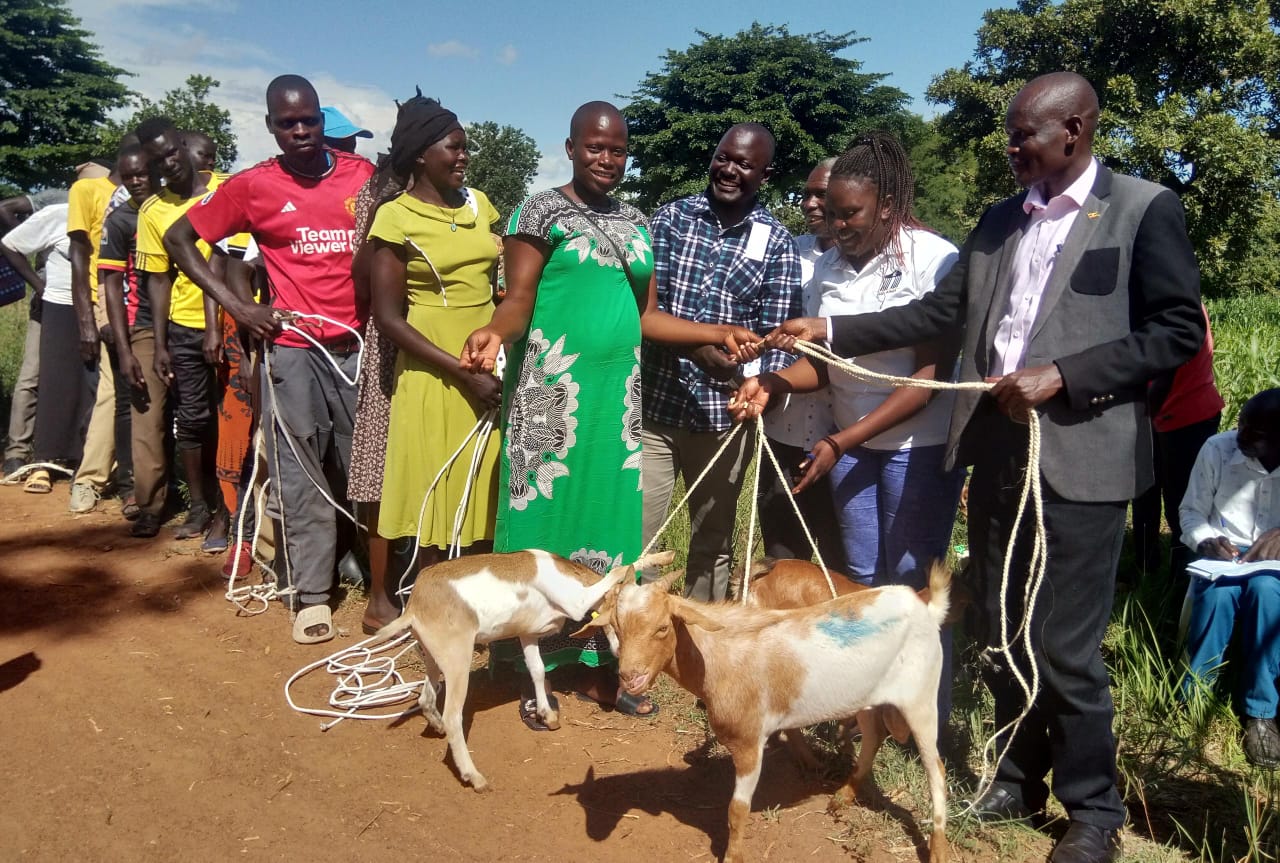
The State House Poverty Alleviation Department has delivered a fresh batch of 236 improved hybrid goats to 78 households across Katakwi District.

The beneficiaries hail from Aketa Parish in Ongongonja Sub-county, Usuk County; Arusai Akan Village in Aeleyany Parish, Ngariam County; and Omagara Village in Angodingod Sub-county, Toroma County.
This initiative, part of the Presidential Wealth Creation Programme under the Bonabagagawale (Abaratakere) framework, is spearheaded by the State House and aims to create sustainable livelihoods through livestock farming.
The handover ceremony was presided over by Mr. Raymond Richard Odeke, who represented Vice President Maj. (Rtd.) Jessica Alupo Rose Epel, the area’s senior-most political figure.

Odeke reiterated that the goat distribution is part of a broader national strategy to fight poverty at the grassroots level through productive, household-centered initiatives.
“This is not just about goats,” said Odeke. “It’s about restoring dignity and building economic resilience among our people.”
Each household received three goats, 120 mature hybrids and 116 pass-on kids, from the initial April 2024 batch.
The State House aims to foster a “pass-on” model, where offspring from the donated goats will be handed over to other vulnerable households, thus multiplying the program’s impact.
According to Esther Akello, Assistant Secretary to the President and the Monitoring Officer for the Eastern Region under the Poverty Alleviation Project, the initiative has already shown remarkable progress.
In just a year, an earlier batch of over 2,000 goats distributed across 39 model villages has increased to more than 3,000 animals.
“This project is about creating wealth, stabilizing livelihoods, and healing communities from the effects of insecurity such as cattle rustling,” said Akello, who represented State House Poverty Alleviation head, Joan Kakwensire.
Katakwi District LCV Chairperson Geoffrey Omolo applauded the initiative, urging recipients to be responsible stewards of the livestock.
“The government has done its part. Now it is up to us to ensure these goats are well-fed, treated, and protected so they multiply and build sustainable wealth in our homes,” Omolo emphasized.
He added that under President Museveni and Vice President Alupo’s leadership, Katakwi is now receiving its fair share of the “development and political cake” through well-structured programs like this one.
The program has been warmly received by beneficiaries who described the support as life-changing.
Isaac Opio, Samuel Okameri, and Charles Olepa from Omagara Village expressed gratitude to President Museveni and Vice President Alupo for the intervention.
“These goats will change my life. I will use them to pay school fees and start a stable income,” said Opio.
Katakwi Deputy Resident District Commissioner Vincent Savior Okwi emphasized that the program is not a handout but a tool for empowerment.
“This is about empowering families to stand on their own. The goats are a resource that, if well managed, will break the cycle of poverty,” he noted.
With additional funding being sought to establish a model farm in Angodingod, leaders and residents remain optimistic about the future.
The program has also extended beyond goats, incorporating cows, pigs, sheep, and improved agricultural inputs aimed at addressing food insecurity and boosting agribusiness.
About Author