By Emmanuel Okiria
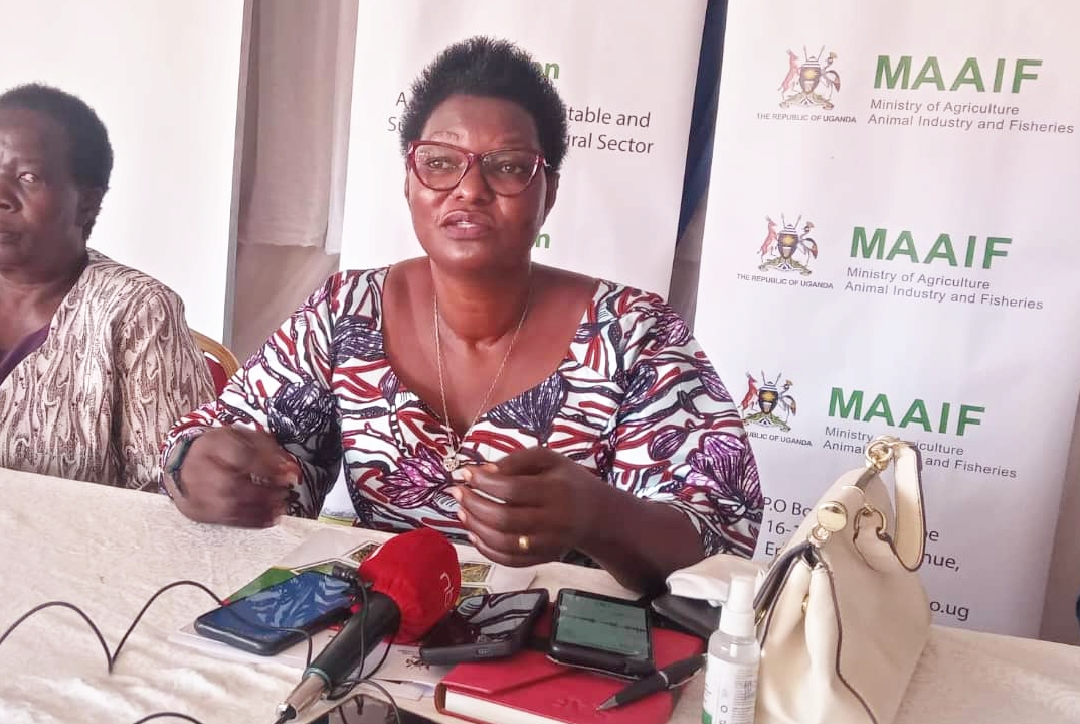
The Ministry of Agriculture, Animal Industry and Fisheries (MAAIF) has engaged stakeholders from ten districts across the Teso region to disseminate information about the government’s new policy shift on Foot and Mouth Disease (FMD).

In a bid to combat and reduce FMD, the government has introduced a cost-sharing approach where farmers will contribute a maximum of UGX 7,000 per animal for vaccination.

The regional stakeholder engagement meeting, held in Teso, included representatives from ten districts: Kalaki, Alebtong, Dokolo, Kaberamaido, Soroti, Kumi, Pallisa, Bukedea, Serere, and Ngora.
Each district was represented by six key stakeholders, including the LC5 chairperson, Resident District Commissioner (RDC), District Production Officer, Farmers’ Representative, District Veterinary Officer (DVO), and District Internal Security Officer (DISO).

Hon. Hellen Adoa, State Minister for Agriculture, Animal Industry, and Fisheries and Woman Member of Parliament for Serere District, emphasized the severity of FMD in Uganda.
She noted that those who do not vaccinate their animals cause others to suffer financial losses due to restricted sales of animal products.
“Many farmers are giving up on rearing animals, especially pigs, because FMD has led to significant losses. This affects business, market access, and meat consumption, especially during quarantine periods. It also impacts household income, making it difficult to empower local farmers. The government, therefore, introduced this policy shift to boost market access and increase incomes from animal products,” Adoa stated.
She also highlighted the need to expand market opportunities for Ugandan meat, which is currently limited due to FMD outbreaks.
“We have a lot of meat, but we cannot export it due to the disease. This policy aims to unite the government and farmers in cost-sharing to enhance output and profitability.”
Additionally, Adoa stressed that the policy shift would ensure the active involvement of extension workers, who had previously been underutilized.
“Extension workers have been idle, only waiting for salaries. With this policy, we will ensure they are actively engaged and facilitated to check on animal health,” she said.
She further raised concerns about counterfeit and adulterated veterinary medicines in the market, assuring farmers that the government will provide genuine vaccines.
“I encourage all stakeholders, RDCs, LC5s, District Production Officers, and others, to educate the public about this policy shift. It is not just for the government but for the benefit of farmers and the country as a whole,” she urged.
Adoa also warned against corruption, cautioning officials against extorting money from farmers.
“This policy will expose corrupt extension workers, and those caught engaging in bribery will lose their jobs,” she warned.
Dr. Anna Rose Okurut Ademun, Commissioner for Animal Health at MAAIF, explained that many countries refuse to import Ugandan animal products due to FMD.
She cited Uganda’s large livestock population, which includes 14 million cattle, 17 million goats, 4 million sheep, and 7 million pigs, as a missed economic opportunity.
She noted that the government has decided to vaccinate animals twice a year to control FMD.
“Animals, whether sick or healthy, will be vaccinated biannually. The disease affects cattle, pigs, sheep, goats, and even wildlife like antelopes and buffaloes. The only effective control measure is mass vaccination, which will encourage international trade,” she explained.
Dr. Ademun also assured farmers that the government remains committed to their welfare.
“Farmers will only purchase the vaccine, while the government will cover the costs of administration. Extension workers will be fully funded by the government, and farmers will not incur extra charges,” she said.
Dr. Ojala Robert, Regional Veterinary Inspector for Teso-Karamoja, noted that the government previously provided free vaccines but has now adopted a cost-sharing model due to financial constraints.
“The new cost-recovery policy means farmers will pay for the vaccine, while the government will fund veterinary officers, fieldwork, and vaccine administration,” he explained.
He emphasized the importance of sensitizing local communities about their responsibility in this initiative.
“The aim of this regional stakeholder meeting is to educate district leaders, who will then inform the public about their role in the cost-recovery FMD strategy,” he added.
Dr. Ojala revealed that FMD has been a major challenge in Uganda, with over 46 districts under quarantine restrictions in 2024.
“In Teso, Kumi and Bukedea were affected. However, with the recent vaccine donation from the Egyptian government, the situation has improved, and Teso is now free from quarantine restrictions,” he concluded.
About Author