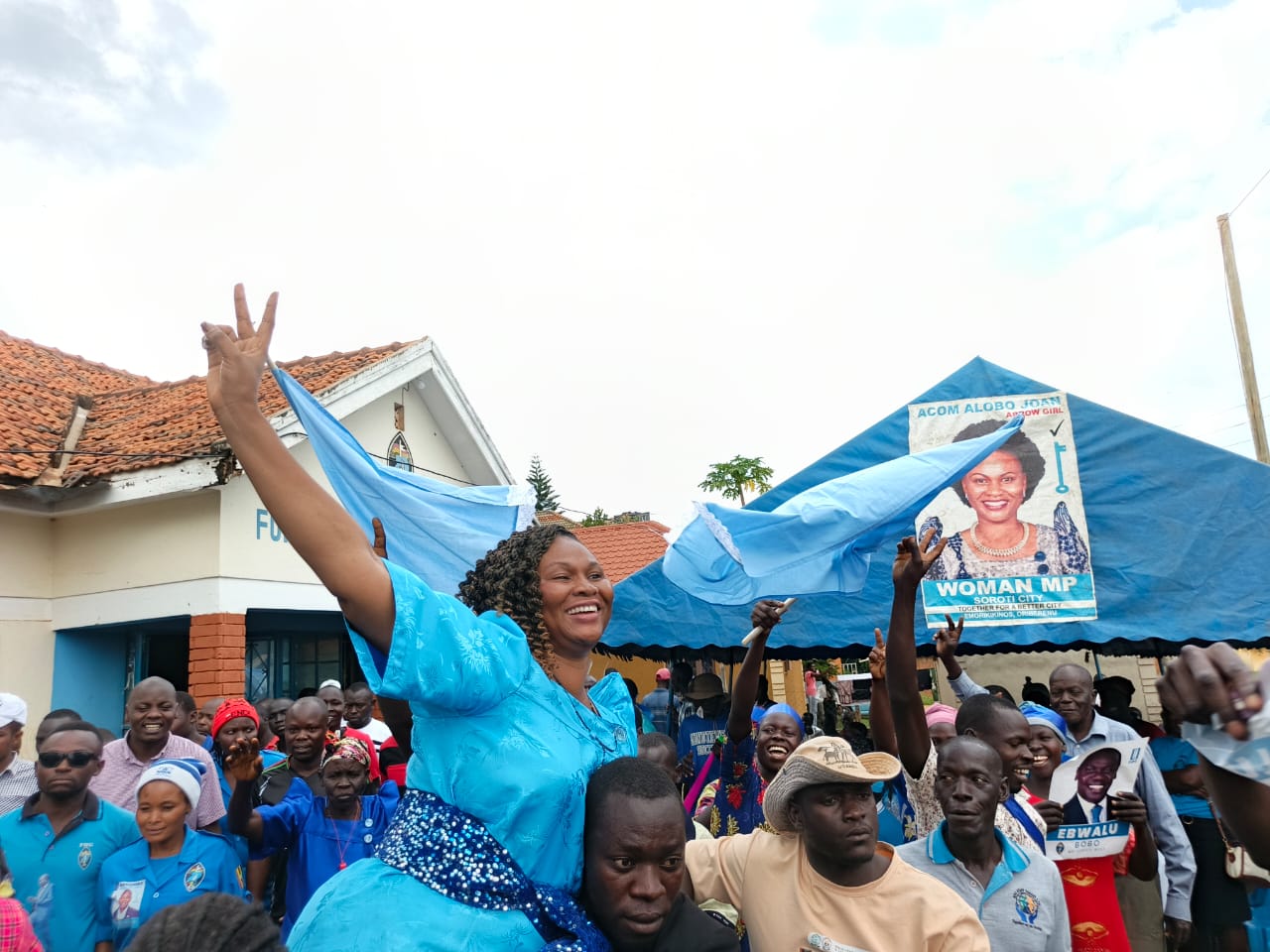
The Forum for Democratic Change (FDC) has officially nominated two incumbent legislators, Soroti City Woman MP Hon. Joan Alobo Acom and Soroti City West Division MP Hon. Jonathan Ebwalu, as flag bearers in the forthcoming 2026 general elections.
The two legislators, both vocal critics of the ruling National Resistance Movement (NRM) government, used the occasion of their nomination to unveil an ambitious reform agenda and to declare their commitment to ending President Yoweri Kaguta Museveni’s decades-long rule.

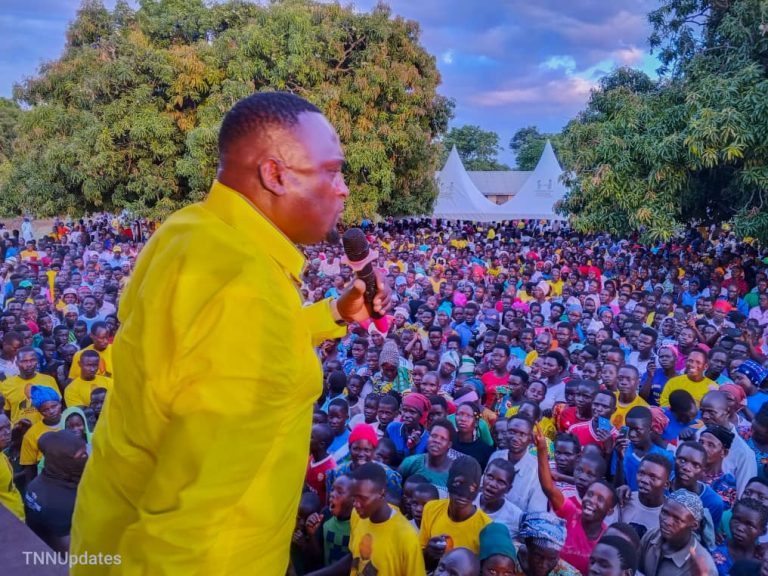
Addressing supporters and FDC delegates shortly after their nomination at the Soroti City Electoral Office, both MPs delivered fiery speeches centered on equity, social justice, healthcare reform, education, and land rights.

Hon. Joan Alobo Acom, seeking re-election for a second term as Soroti City Woman MP, said she is not seeking office for vanity or comfort, but rather to complete an unfinished mission rooted in five critical pillars: education, health, land rights, good governance, and continuity in legislation.
“I seek to walk back to Parliament to ensure that the bills, motions, and acts we started and have not yet completed are finalized in the next term,” Alobo said, amid cheers from a crowd of FDC youth supporters.
On education, Alobo highlighted her personal efforts to secure sponsorships for vulnerable children in Soroti.
“It may have been little, but it showed what is possible. If given another term, I want to lobby for more sponsorships and funding to make sure education in Soroti City rises to higher levels,” she added.
Turning to healthcare, Alobo pointed to her consistent oversight at Soroti Regional Referral Hospital, which she said remains underfunded and in dire need of revamping.
“I am personally pushing for the renovation and upgrading of Soroti Referral Hospital, a promise made in 2020 but yet to be fulfilled,” she noted.
“I’ve ensured oversight on malpractice like the selling of blood, and I can confidently report that this has stopped.”
She emphasized the importance of completing the ongoing construction of a regional blood bank, saying, “We can’t leave such projects halfway. New leaders may not know which doors we knocked on or which offices we entered to secure these commitments.”
Alobo also fiercely defended her stand on land ownership.
As a trained physical planner and land surveyor, she expressed her strong opposition to the proposed Land Amendment Bill, which she claims seeks to alter Section 26 of the Land Act and weaken the constitutional right of Ugandans to own land.
“I will not allow this amendment to pass. Land belongs to the people, not to the government,” she asserted. “If the government wants land, let them follow the willing buyer, willing seller principle. That is justice. That is democracy.”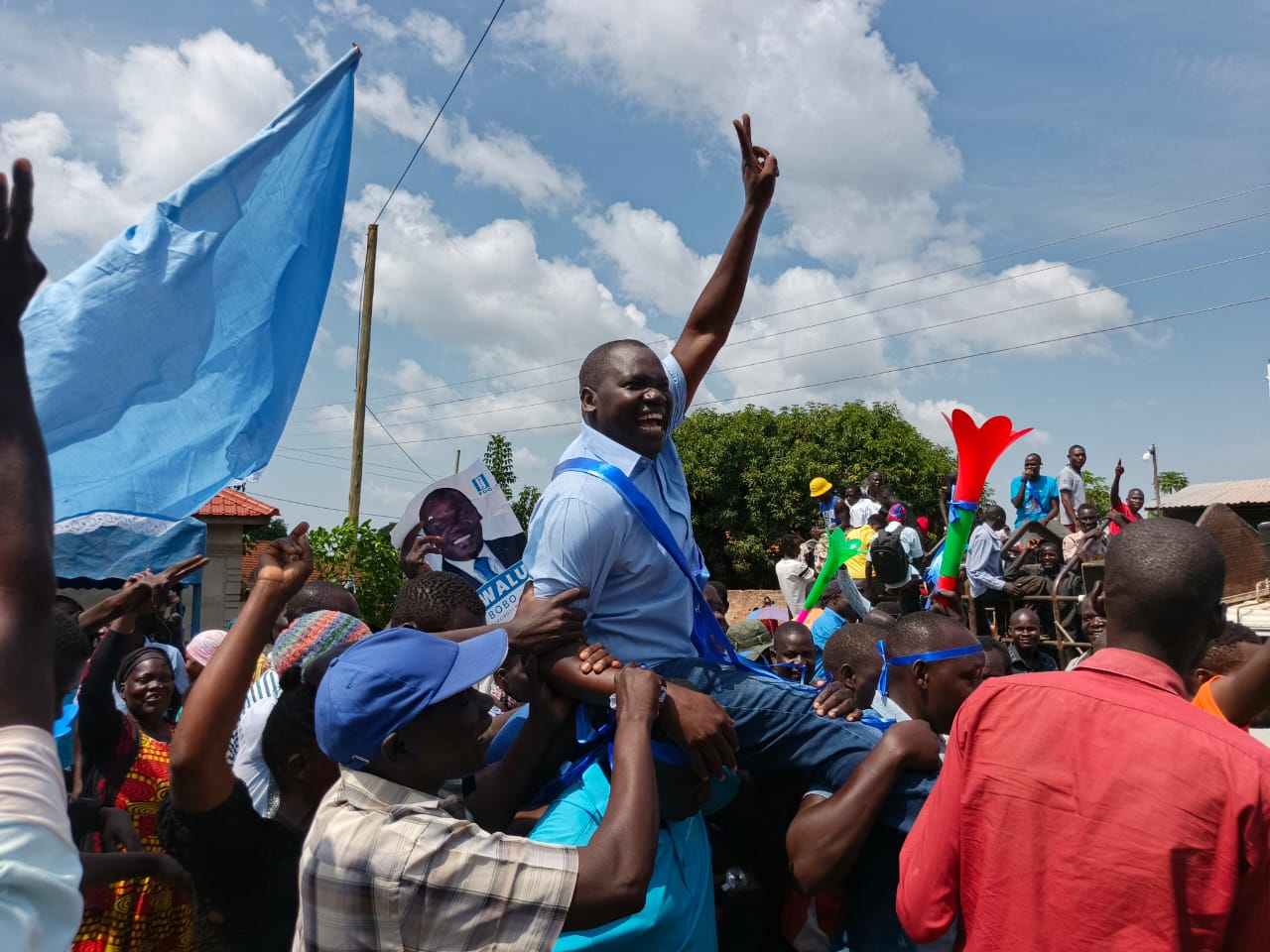
Meanwhile, Hon. Jonathan Ebwalu, a journalist-turned-legislator who has emerged as a passionate voice for transparency and equity, described his nomination as the start of “a national liberation movement” to free Uganda from systemic corruption, economic marginalization, and sectarianism.
“We have inequity in our country. Jobs are only given to one region. Children from Karamoja, Soroti, or Kisoro don’t stand a fair chance in national recruitment,” Ebwalu lamented.
“But when you vote for FDC, you vote for equity, one Uganda, one people.”
Ebwalu accused the NRM government of deliberately entrenching inequality in access to public resources, citing examples in education, healthcare, and job opportunities.
“Today, we have hospitals for the rich and hospitals for the poor. That’s not the Uganda we want. FDC is here to fix the broken healthcare system and ensure that everyone, regardless of wealth or location, has access to quality medical care,” he said.
Ebwalu also raised concerns about the high cost of tertiary education.
“Only children of the rich can afford to study at Makerere or Kyambogo. What happens to our bright kids from Pamba, Nakatunya, or Arapai? They are left behind,” he lamented. “FDC wants a Uganda where education is a right, not a privilege for the elite.”
The MP also decried rampant corruption in government institutions.
“Our people are stealing public funds with impunity. We have a duty to stop this rot,” he declared, emphasizing that the nomination symbolized more than just political ambition, it marked the dawn of a new era.
“This is bigger than just me being nominated as flag bearer for Soroti City West. This is the beginning of the liberation of our country. In FDC, positions are not ring-fenced. Everyone competes, and the people choose the best,” he stated.
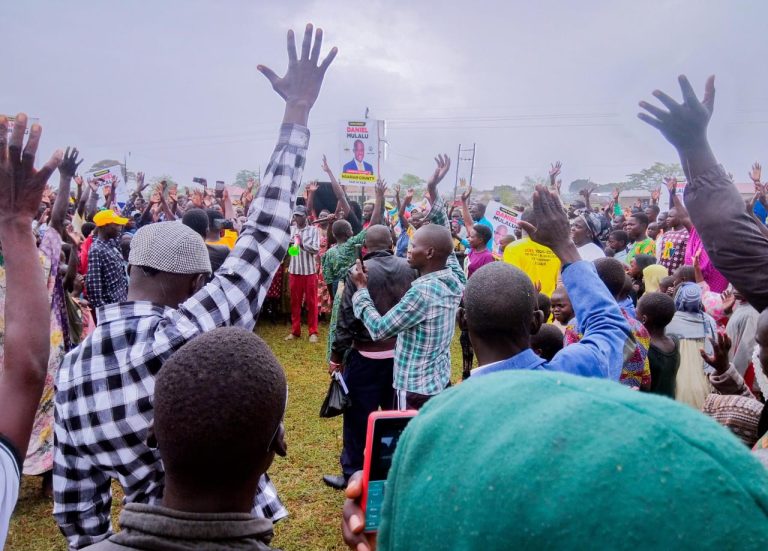
Both MPs rallied their supporters to remain vigilant and unified ahead of the highly anticipated 2026 elections.
They vowed to work closely with the FDC presidential flag bearer, who is yet to be announced, to ensure the end of what they termed “dictatorial rule” under President Museveni.
Alobo concluded her speech with a message of continuity and hope.
“I am not new. I have fought alongside you. I’ve been to the offices. I’ve been on the floor of Parliament. I know the issues, and I know how to fight for them. Let’s finish what we started.”
Ebwalu, on his part, echoed calls for regime change. “This regime has failed us. From corruption to nepotism, from failing health systems to poor education, enough is enough. Vote FDC. Vote for a new Uganda.”
Soroti City remains one of the most politically active regions in Eastern Uganda, known for producing vocal opposition leaders and engaged electorates.
In 2021, FDC won both city parliamentary seats, a significant blow to the ruling NRM which had previously dominated the region.
Both Alobo and Ebwalu have since used their time in Parliament to raise critical national issues, including human rights violations, youth unemployment, and government accountability.
Their strong grassroots presence and continued criticism of the NRM have endeared them to many constituents, especially the youth and urban poor.
About Author