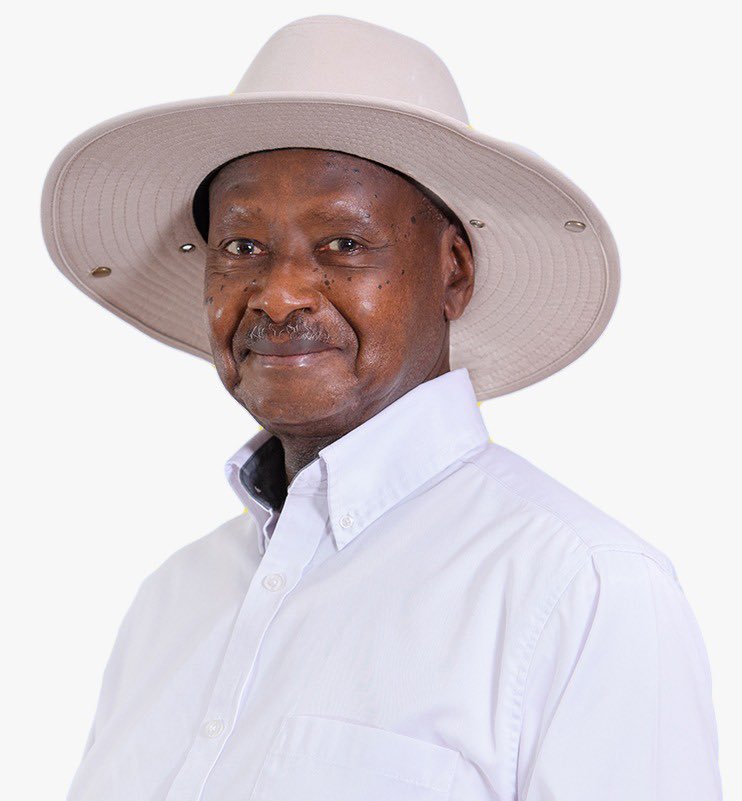
Uganda’s long-serving President Yoweri Kaguta Museveni was today officially nominated to contest in the 2026 general elections as the flagbearer of the ruling National Resistance Movement (NRM).
The nomination, presided over by Justice Simon Byabakama, Chairperson of the Electoral Commission, sets the stage for Museveni’s bid to extend his rule into a fourth decade.
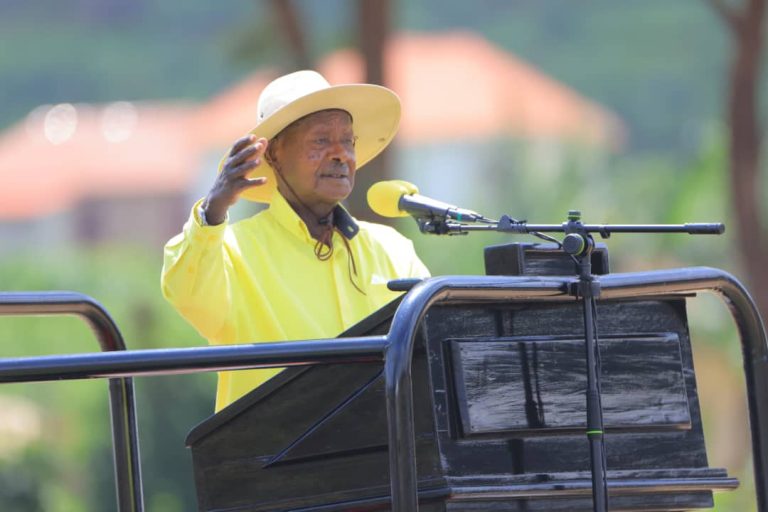
In a wide-ranging post-nomination address at Lubowa, Wakiso District, Museveni expressed gratitude to NRM delegates for endorsing him once again as party chairperson (2025–2031) and presidential flagbearer (2026–2031).

He used the occasion to reflect on Uganda’s transformation under his leadership, outline fresh priorities for the next term, and make controversial remarks on public sector pay that drew sharp reactions from education circles.
Museveni struck a celebratory yet measured tone as he acknowledged the trust placed in him by party members.
“I want to thank the NRM members for again trusting in me and meeting me as the NRM Chairperson for the period 2025–2031, and also for the flagbearer for the period 2026–2031,” he said. “Approving our candidacy is a lot of work, a lot of paperwork, but I congratulate the teams for managing it.”
The veteran leader, who first took power in 1986, reminded supporters of Uganda’s journey of transformation over nearly four decades.
Pointing to the dramatic physical changes in areas like Lubowa, once vast coffee plantations but now developed into residential and commercial hubs, Museveni argued that Uganda’s progress speaks louder than political rhetoric.
“If you compare satellite pictures of this area from 1986 and now, you will not have to campaign much. The land speaks for itself,” he said, urging the NRM media team to showcase Uganda’s transformation through visuals rather than endless speeches.
Museveni’s address focused on two major thrusts: consolidating Uganda’s economic growth and addressing grassroots social issues.
He cited World Bank and IMF figures showing Uganda’s Gross Domestic Product (GDP) had nearly doubled in the past five years, rising from USD 34 billion to USD 66 billion.
“To double the size of GDP in one term is not a mean achievement,” Museveni said. “This shows the country is moving steadily from low-income to middle-income status, and in the next Kisanja we must advance to high middle-income and eventually First World standards.”
The President outlined several pillars for sustaining growth: ensuring timely repair of tarmac and marrum roads, expanding coverage and improving reliability and sustaining free education for children of the poor in government schools, while the wealthy can opt for private institutions.
Others are; maintaining strong immunization programs and ensuring drugs are available at public health centers, completing safe water provision for all villages and tackling crime, impunity, and corruption by strengthening community vigilance and law enforcement structures.
Museveni emphasized the role of peace, manpower, and infrastructure in attracting foreign investment.
Citing advice from the Indian business community, he described Uganda as “a land of three Ps, Peaceful, Profitable and Progressive.”
The most contentious part of Museveni’s remarks came when he dismissed calls from teachers’ unions for harmonization of salaries between science and arts educators.
“We are saying, let us start with the scientists because they are fewer but needed immediately. Later on, we shall go to the Arts Teachers’ pay. The Arts Teachers don’t agree to this, which we also cannot accept. This is so much selfishness,” Museveni asserted.
He argued that prioritizing scientists was an economic necessity, not favoritism.
“For the economy to develop, the roads need engineers, power stations need technicians, hospitals need doctors, and agriculture needs extension workers,” he said.
In an attempt to soften the sting, Museveni noted that he personally refused to increase his own salary, which currently stands at UGX 3.6 million per month.
He revealed that he deducts 20% of this for NRM party activities, leaving his wife, First Lady and Education Minister Janet Museveni, with about UGX 2.7 million.
However, the President’s blunt dismissal of arts teachers’ concerns quickly overshadowed his economic message.
Critics argued that his remarks risk alienating thousands of educators and could stoke unrest in the education sector, where strikes over pay disparities have become increasingly frequent.
Justice Simon Byabakama, who formally declared Museveni a duly nominated presidential candidate, urged all contenders, agents, and supporters to uphold democratic values.
“We appeal to all participants, their agents, aspirants and the general public to uphold the values of peace, dignity and mutual respect throughout the nomination process and mostly in the upcoming campaign period,” Byabakama said.
He reminded candidates that Uganda’s democratic reputation depends on peaceful and orderly conduct.
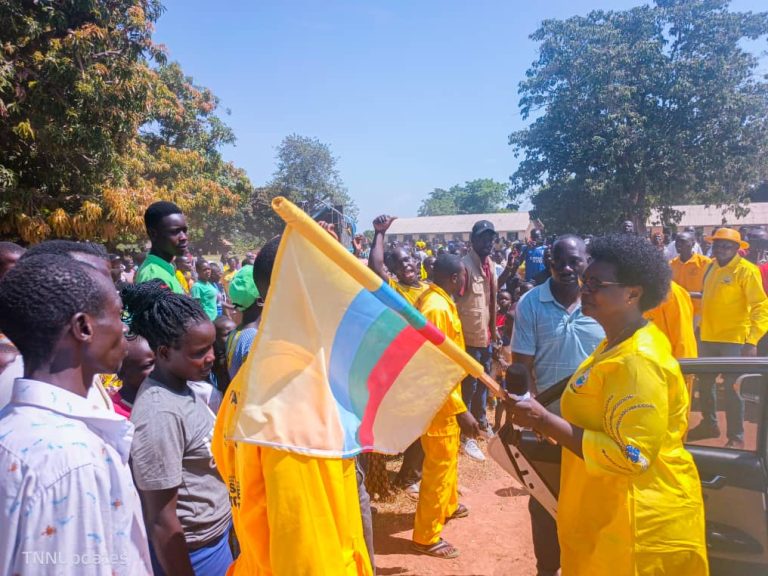
Museveni’s nomination sparked jubilation among his loyalists but also renewed debate about Uganda’s political future.
Supporters at Lubowa described him as a tested leader who had brought peace, infrastructure, and economic stability.
John Ocen, an NRM youth mobilizer, said: “We are confident that Mzee is the only leader who can safeguard Uganda’s peace and continue the journey to prosperity. No one else has the vision he has shown.”
But opposition voices dismissed Museveni’s economic claims and criticized his refusal to address salary inequities in the education sector.
One of the teachers’ in Soroti who asked for anonymity, said: “Calling us selfish is disrespectful. Arts teachers form the backbone of Uganda’s education system, and their welfare cannot be ignored. Scientists and artists both shape the nation’s future.”
Political analysts noted that Museveni’s emphasis on infrastructure and investment resonated with the middle class and business community, but his hardline stance on salaries could prove a liability among grassroots voters, especially civil servants.
For advertising or to run your news article, contact us on 0785674642 or email tesonewsnetwork@gmail.com
About Author