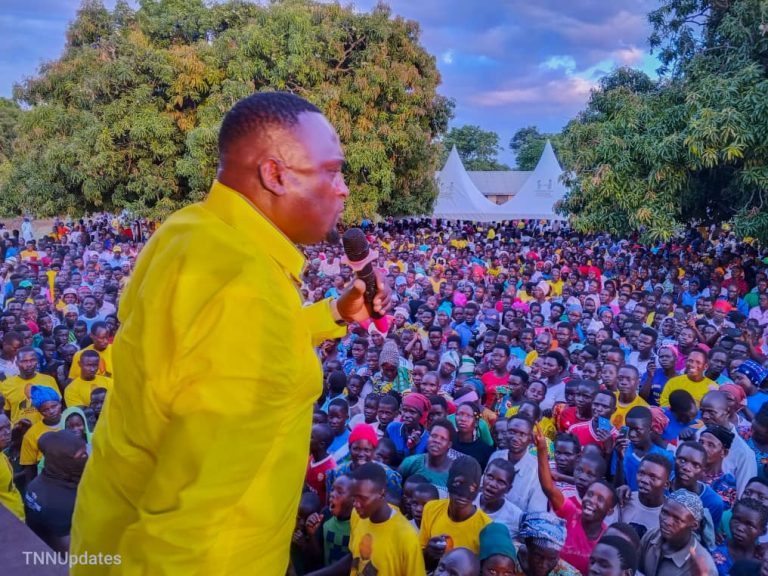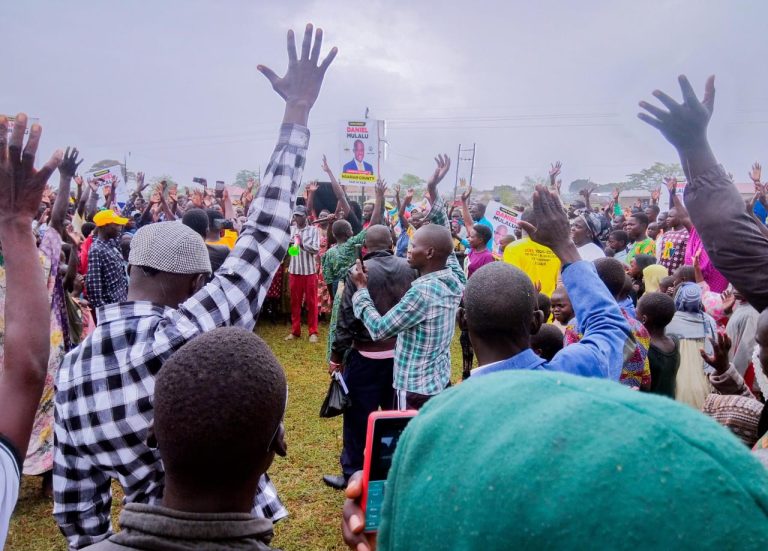

The political temperature within the ruling National Resistance Movement (NRM) has risen sharply following the entry of Jacob Markson Oboth Oboth, Uganda’s Minister of Defence and Veteran Affairs, into the race for NRM Vice Chairperson for Eastern Uganda.
Oboth, who also serves as the Member of Parliament for West Budama, declared his intentions in a cryptic but pointed statement shared on his official X (formerly Twitter) account.
“Every house with electricity requires a circuit breaker. I will explain this in detail soon for all Ugandans and the people from the East to understand the what? The why? The how? To resolve on the who?” Oboth wrote.

The statement, though metaphorical, appears to signal his readiness to challenge the status quo and potentially offer a new direction for the NRM’s Eastern Uganda leadership.
Oboth becomes the second high-profile candidate to publicly declare his intention to unseat Capt. Mike Mukula, who has served as NRM Vice Chairperson for Eastern Uganda since 2005.
Earlier this month on April 2, David Calvin Echodu, the Soroti City West MP and long-time NRM mobilizer, also announced his candidacy, calling for “correction of past mistakes” and a fresh injection of energy into the party’s top ranks.
Mukula, a former State Minister for Health and former MP for Soroti Municipality, has successfully defended his seat for nearly two decades, including during a hotly contested race against businessman Sanjay Tanna in 2020.
His tenure has been marked by loyalty to President Museveni, strategic mobilization in the Teso sub-region, and a prominent media profile.
However, with Oboth and Echodu now in the race, Mukula faces his toughest internal challenge yet.
Minister Oboth brings political heft and a national profile to the contest.
His role as Defence Minister places him at the heart of Uganda’s security and governance structures, and his legal background, as a trained lawyer and former chair of the Parliamentary Legal and Rules Committees adds to his credentials.
By invoking the metaphor of a “circuit breaker,” Oboth may be hinting at the need for disruption, reform, or redirection within the NRM’s Eastern leadership.
Though he has yet to unveil his full platform, political observers say Oboth’s entry could dramatically shift the race, especially if he is able to marshal support from party delegates in Busoga, Bukedi, Bugisu, Sebei, and Teso sub-regions.
The growing interest in unseating Mukula may reflect broader tensions within the NRM, particularly in how the party balances continuity versus renewal.
With President Museveni having led Uganda for nearly four decades, debates around generational leadership, regional inclusion, and the role of the Central Executive Committee (CEC) have become more urgent.
Echodu, during his declaration, emphasized the need to broaden the NRM’s support base, warning that if the party stops serving the people, “it loses its mandate.”
His remarks were echoed by Uganda’s Ambassador to Nigeria, Nelson Oceger, who warned of internal threats like personal gain, intolerance, and corruption.
Oboth’s decision to join the fray adds political complexity and competitive energy to the race, ensuring that Eastern Uganda’s delegates will have meaningful choices when the CEC elections are held later this year.
The weeks ahead are expected to be intensely political as the three candidates, Mukula, Oboth, and Echodu begin traversing the region, meeting NRM cadres, and presenting their visions for the future.
About Author