
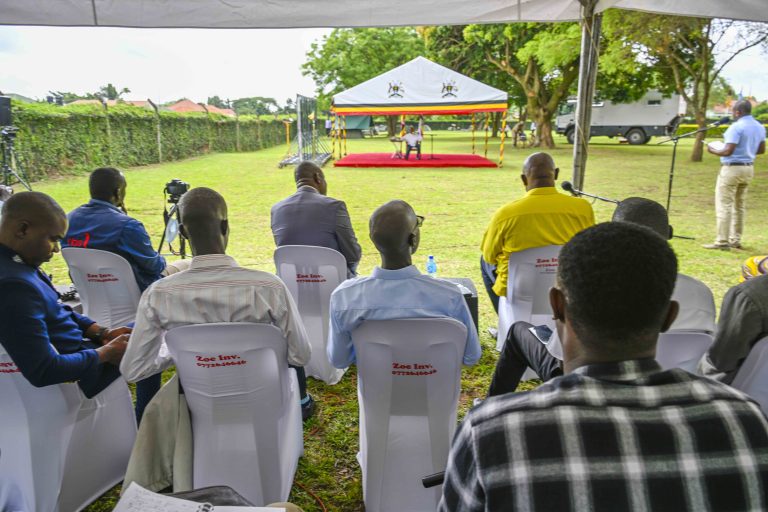
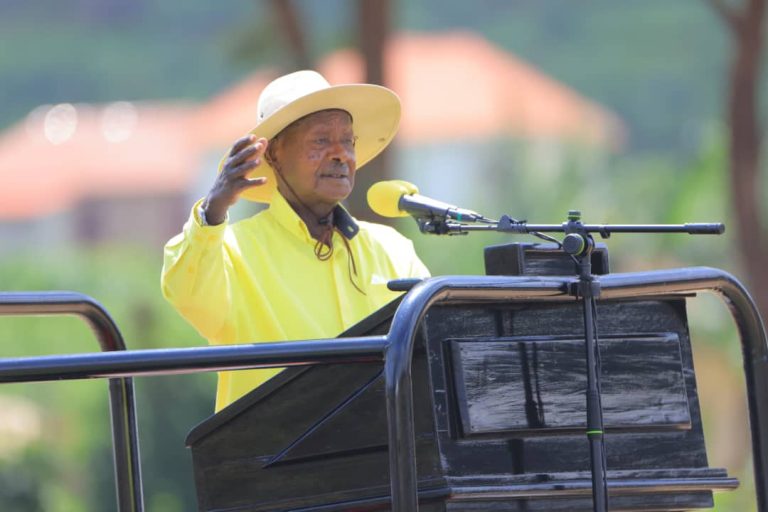
A brewing storm has emerged among journalists in the Teso Sub-Region over a pledge made by President Yoweri Kaguta Museveni during his recent Parish Development Model (PDM) assessment tour in the region.
The President promised to donate Uganda Shillings 100 million, 250 sheep, and a van to support journalists in the region.

However, the announcement has sparked confusion and division within the media community, with conflicting claims over the number of journalists in the area and concerns over the transparency and accountability of past financial assistance.

The discord revolves around two primary groups of journalists operating in Teso: the Teso Media Initiative Development SACCO (TEMID) and the Teso Journalists for Community Empowerment (TEJFOCE).
The tension stems from a range of issues, including claims of mismanagement of previous funds, disputes over the accurate number of journalists in the region, and the transparency of how future allocations should be handled.
During his visit to Teso, President Museveni pledged to support the region’s journalists with a substantial donation: Uganda Shillings 100 million, 250 sheep, and a van, which he said would enhance their work and support their welfare.
This announcement was made in the presence of several local leaders and journalists, many of whom welcomed the gesture.
However, almost immediately after the President’s visit, confusion began to unfold.
The trouble began when Mr. Sam Odongo, the head of TEMID, presented a claim that there were 205 journalists operating within the Teso Sub-Region, all of whom were allegedly registered under his organization.
This statement, made during the President’s visit, has been disputed by several journalists in the region, who say that the number is exaggerated and inaccurate.
TEMID, which operates as a SACCO for a section of media practitioners in Teso, has been at the center of controversy for some time. In 2022, the organization received Uganda Shillings 50 million from the government, intended for the development of journalists.
The money was reportedly allocated during the Soroti City East by-elections, when government-backed candidates faced stiff opposition.
The funds were meant to support journalists, promote media development, and incentivize positive coverage.
However, allegations quickly surfaced that the funds had been misused, with little to show in terms of actual support for journalists.
Many journalists accused TEMID of failing to provide accountability over the 50 million shillings raising concerns that the new pledge from President Museveni could meet the same fate.
However, the situation has taken a more intense turn with the intervention of the Teso Journalists for Community Empowerment (TEJFOCE), a main journalists group that represents a more significant number of journalists in the region.
TEJFOCE asserts that only around 140 journalists are actively working in Teso Sub-Region and that all of them are registered under their umbrella, not TEMID.
The group has made it clear that it does not trust TEMID’s management of the 50 million shillings allocated in 2022, and they are now calling for full accountability before any further funds are disbursed.
TEJFOCE has asked the President’s office to delay in the disbursement of the 100 million shillings pledged by Museveni until TEMID provides transparent records and clear documentation on how the previous funds were utilized.
The dispute over the pledge highlights broader concerns about how resources are managed within the media community in Teso.
Both groups agree that journalists in the region need support, but there is a fundamental disagreement over how that support should be allocated and managed.
For many journalists in Teso, the real issue is ensuring that the pledged funds and resources reach the intended recipients.
Several journalists have voiced concerns that, if TEMID is allowed to handle the funds without proper oversight, the money will end up in the wrong hands.
Samuel Okome Moringa the Dokolo FM Radio Journalist attached to Teso Sub Region after Museveni’s visit in a long post titled; SHARED PROSPERITY FAILED IN TESO LAND published on November 21, 2024, said he has been fought by “some bed bags middle men journalists in Teso region who are cursed and dark hearten with a lot of jealousy and move with plates and saucepans in their pockets.”
He wrote that, “Instead of team working for development and we fight poverty they are opening their eyes on my media house Dokolo FM. I was a credited with my name in the list of the media to benefit one million from the President visit in Teso land at the stage lodge where each journalist from Teso received one million from the President tour on wealth creation campaign. But some bed bags journalist de campaigned my media house Dokolo FM which they say it’s not listened in Teso land that it’ A radio for ICHOLIN and LANGO tribe they also pinned me why am promoting Acholi language in Teso. Oh God.”
He concluded his long post by saying, “I beg my Teso people let’s stop the spirit of jealously, hatred, division, tribalism and tagging lies to your neighbour for yourself needs. We need each other and development is all we should fight for not our own stomachs. Jesus save Teso land!!!”
Some also fear that the disbursement of such a large sum could further fuel divisions within the media community, with smaller, independent journalists fearing they will be left out in favor of larger, more politically aligned groups.
The confusion surrounding the pledge has also raised political questions.
Some journalists argue that the allocation of funds is part of a broader political strategy to win media support ahead of upcoming elections.
With the 2026 elections on the horizon, some journalists in Teso are concerned that the government’s promises are being used to buy loyalty rather than address the genuine issues faced by the media community.
The President’s pledge of 100 million shillings, 250 sheep, and a van presents a significant opportunity for media development in Teso, but the road to its effective implementation is fraught with challenges.
Unless both factions of journalists can come together to ensure transparency and accountability, the promise of support could be undermined, leaving many in the media community feeling disillusioned and distrustful of future government pledges.
As the issue continues to unfold, many journalists in Teso are waiting anxiously for a resolution that will bring clarity and ensure that the resources meant to support them are used effectively and equitably.
About Author



This has really undressed the media fraternity in Teso. Please journalists sort out this peacefully.
Your correct, but mostly the politicians must also stop using journalists in Teso for the case of them benefiting as long as they are aligned to his policies and political positions and agenda.
I come in peace