Tensions are simmering in Bukedea district after the Electoral Commission (EC) upheld a local tribunal’s decision to delete three parliamentary aspirants from the voters’ register, a move that residents fear undermines democracy and compromises the credibility of the 2026 elections.
The controversy arose from a petition filed by Zipporah Akol, challenging the eligibility of three women who had declared interest in contesting for the Bukedea Woman Member of Parliament seat.
The affected aspirants are Norma Susan Otai of the Forum for Democratic Change (FDC), Hellen Akol Odeke (Independent), and Mercy Marion Alupo of the National Unity Platform (NUP).

The seat is currently held by Anita Annet Among, the Speaker of the 11th Parliament, who has maintained firm political dominance in Bukedea.
Residents now suspect that the disqualification of her potential challengers is part of a calculated effort to shield her seat from competition.
The petitioners alleged that the three women were unlawfully registered as voters in Koena, Malera, and Kotolut parishes respectively.
The tribunal sided with the petition and forwarded its recommendation to the Electoral Commission, which confirmed their deletion.
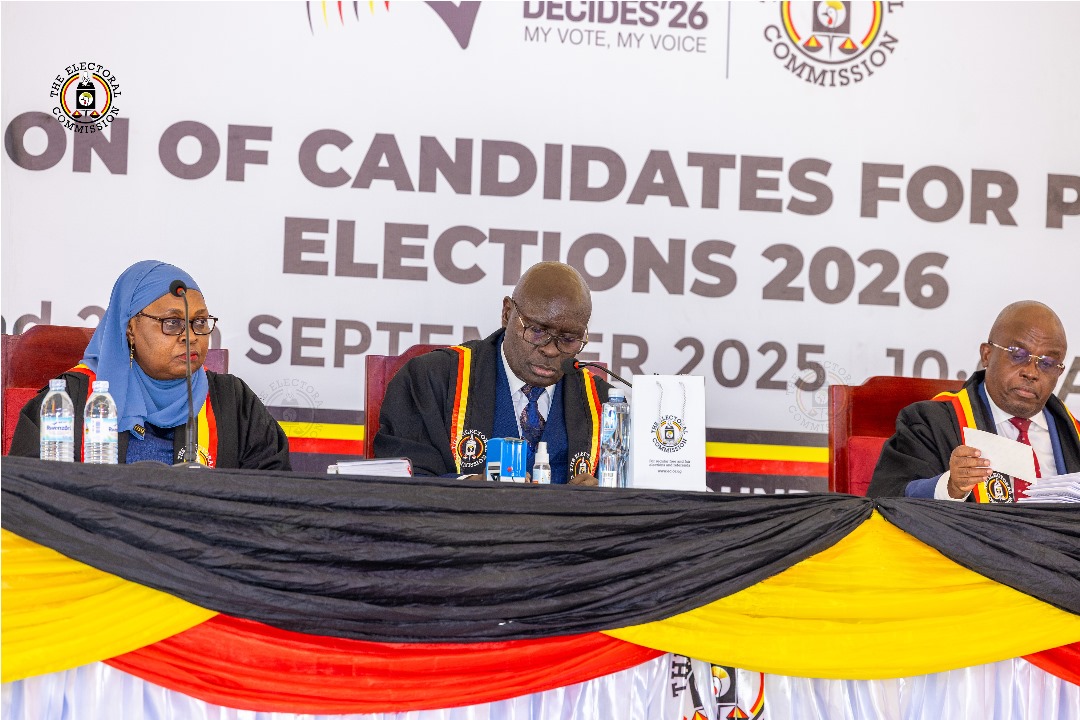
In an affidavit filed before the High Court in Kampala, EC Chairperson Justice Simon Byabakama defended the decision, insisting the Commission was merely upholding the law.
He argued that the tribunal acted within its mandate, and that the nationwide update of the voters’ register, conducted between January 20 and February 17, 2025, was meant to address such irregularities.
However, the ruling has sparked outrage among voters in Bukedea, many of whom feel silenced and stripped of their right to freely choose their leaders.
Francis Asipo Okia, father of aspirant Mercy Marion Alupo, expressed his dismay at the decision.
“My whole family comes from Bukedea, and none of us has ever lived anywhere else. How can the Electoral Commission say Alupo does not come from here? Her mother is from Kidongole Sub County, where she is a registered voter,” he said.
Okia added that his daughter voted in the 2021 elections in Bukedea, proof that she has been a legitimate voter for years.
“This is intimidation. How can she suddenly be declared an outsider now that she wants to contest?” he asked.
Other residents were equally vocal. Steven Opolot, a youth from Bukedea Town Council, criticized the EC’s conduct: “It’s not right for the Electoral Commission to delete these people’s names. This violates one’s rights as a citizen. The Commission should have engaged the community to verify the truth. Instead, they have chosen to silence those who want to challenge the status quo.”
Opolot insisted that Bukedea has been plagued by similar electoral controversies in the past, always favoring one individual.
“This is not democracy. We should be allowed to vote freely, but every time there’s an election, something comes up to block new candidates,” he said.
The anger among residents has reached the point where some are calling on President Yoweri Kaguta Museveni to personally intervene.
“If the President himself allows others to contest against him, why are his party members afraid of competition?” Opolot asked.
He urged that aspirants should be allowed to campaign and present their manifestos to the people, leaving voters to make independent decisions.
“We do not have freedom in Bukedea. Women who dare to contest are blocked, arrested, and silenced. This is not a happy community. We are grieved because we are not being listened to,” he lamented.
For many in Bukedea, the EC’s decision is a bad omen for the 2026 general elections.
Muhammad Otai, a resident of Kidongole Sub County, warned that the Commission’s actions show clear signs of bias.
“This is a sign that the upcoming 2026 elections will not be free and fair because the Electoral Commission has already shown which side it is on,” he said.
Otai called for the reinstatement of the three aspirants’ names, insisting that voting and being voted for are constitutional rights.
“We as the people of Bukedea are demanding that these women be allowed to contest. This is the only way we can trust the Commission again.”
The disqualification has particularly unsettled women voters, who feel their representation is being compromised.
Josephine, a resident of Malera Sub County, questioned whether the EC was deliberately shutting women out of leadership.
“When did we reach a point where democracy is compromised? Women in Bukedea should be allowed to express their interest to contest freely,” she said.
Her sentiments were echoed by Robert Okalany, 52, of Koena Sub County, who reflected on Uganda’s turbulent history of governance.
“We have lived through different governments, but this kind of impunity, where aspiring leaders are denied their chance before elections, is wrong. People must be given their right to vote,” Okalany said, adding that the Uganda Human Rights Commission should step in to protect citizens from political manipulation.
“We have in Uganda a Constitution that guarantees our rights, but when politics interferes, those rights are denied. This must be challenged.”
Despite the mounting criticism, the EC insists it is acting lawfully.
In its affidavit, the Commission said it had reviewed the tribunal’s findings and found that the aspirants were irregularly registered.
Justice Byabakama emphasized that the voter update exercise was meant to clean up the register ahead of 2026, and that anyone aggrieved by the Commission’s decisions could seek redress through the courts.
The case is now before the High Court in Kampala, with Justice Simon Peter Kinobe scheduled to deliver a ruling on October 27, 2025.
The judgment will determine whether the three aspirants remain off the register or are reinstated in time for nominations slated for October 22–23.
For many in Bukedea, the ruling will be a litmus test for Uganda’s democratic institutions. A decision against the aspirants, they argue, will confirm fears that the 2026 elections are already compromised.
Political analysts warn that the situation in Bukedea reflects a broader pattern of narrowing political space in Uganda, particularly for women and opposition candidates.
“The deletion of these aspirants raises serious questions about inclusivity, fairness, and the independence of the Electoral Commission,” Andrew Otim observed. “If communities perceive that the Commission is acting under political pressure, public trust in elections will collapse.”
As the October court ruling approaches, the fate of three women, and the credibility of Uganda’s electoral process, hangs in the balance.
For advertising or to run your news article, contact us on 0785674642 or email tesonewsnetwork@gmail.com
About Author