By Emmanuel Olinga
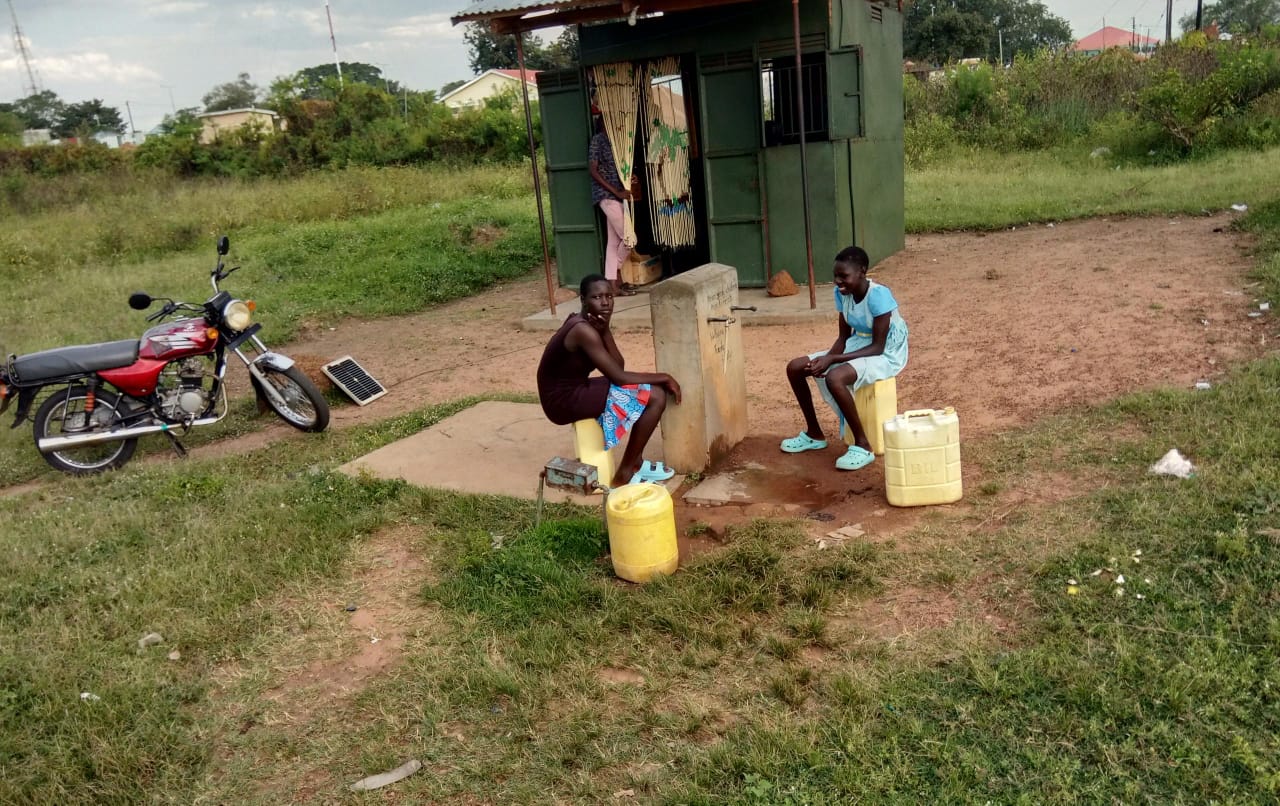
Residents of Katakwi Town Council have raised concerns over what they describe as unfairly high water tariffs charged at public taps following the recent takeover of water supply management by the National Water and Sewerage Corporation (NWSC).

The residents argue that instead of bringing affordable and improved services, NWSC’s new pricing structure has made access to clean and safe water more difficult for low-income households, forcing many to return to unsafe boreholes.

According to the official NWSC tariff guide, a 20-litre jerrycan of water should cost UGX 25 (VAT inclusive) when fetched from a public standpipe. The guide also lists water charges per cubic meter as follows: Public Standpipe, UGX 1,060; Domestic customer, UGX 4,307; Institutional/Government, UGX 4,358; Commercial (below 1,500 m³) , UGX 5,168; and Commercial (above 1,500 m³), UGX 4,131.
However, in practice, residents in Katakwi town say they are being charged between UGX 300 and 600 per jerrycan, far above the official rate.

Mr. Moses Ojei, a resident of Katakwi Town Council, said the situation has become unbearable for ordinary families.
“We expected NWSC to bring down the rates after taking over from the Eastern Umbrella Authority, but the opposite has happened,” Ojei lamented.
“Under the previous system, we used to pay UGX 200 per jerrycan, which was affordable for most people. Now, the same amount of water costs more than double. It’s becoming impossible for families to sustain daily needs.”
Ojei added that the increasing cost of tap water has pushed many residents to return to boreholes, exposing them to health risks.
“Because of these high prices, people are going back to boreholes. But we all know some of these boreholes are close to latrines or contaminated areas. The risk of waterborne diseases is increasing every day,” he warned.
The issue of irregular billing has also emerged among water users. Mr. Gabriel Ogele, the LC1 chairperson of Angopet Cell, said he received a bill of UGX 21,000 in August despite not consuming any water during that period.
“I was shocked when I received the bill. I hadn’t used any water, but the system indicated that I owed money. These errors are frustrating people and raising suspicion about how the billing system is managed,” Ogele said.
He accused some water point operators of exploiting the situation to inflate prices and overcharge consumers.
“The problem is that public tap operators set their own prices, and people have no choice but to pay because water is a necessity,” Ogele added.
Responding to the growing public outcry, Eng. Solomon Agumisiriza, the NWSC Water Management Officer in Katakwi, acknowledged the complaints but insisted that the official tariffs have not changed.
“The national water tariff remains flat. The rate for public taps is UGX 1,060 per cubic meter, which translates to UGX 25 per 20-litre jerrycan. The domestic tap charge is UGX 4,037 per cubic meter, which is standard across the country,” he said.
Agumisiriza, however, admitted that some domestic tap owners have been reselling water to the public at inflated rates, effectively turning their household taps into commercial outlets.
“We have observed that certain individuals are using domestic connections to sell water as if they were public standpipes. This is against NWSC guidelines. Such practices are the reason consumers are paying UGX 200 to 400 per jerrycan instead of the official UGX 25,” Agumisiriza explained.
The NWSC official revealed that the corporation currently manages about nine public taps across Katakwi Town but plans are underway to expand coverage and ensure fair access.
“We are increasing the number of public taps to improve access and reduce pressure on the few available points. Once the expansion is complete, we expect prices to stabilize as competition and accessibility improve,” Agumisiriza said.
He also warned operators of public standpipes and domestic water sellers against exploiting the public, saying stern action would be taken against anyone found overcharging.
“We are calling a joint meeting with all water users and tap owners to sensitize them on the correct tariff structure. Anyone found charging more than the approved rate will face penalties, including possible disconnection,” he warned.
Despite the assurances, residents remain skeptical and have appealed to NWSC to take immediate action to standardize water prices and ensure transparency in billing.
“We want fairness,” said Ms. Agnes Akol, a mother of five in Katakwi Central Ward. “It’s unacceptable for public water to cost more than private water. NWSC should investigate who is benefiting from this mess.”
Local leaders have also called on the Ministry of Water and Environment to intervene and review the implementation of national tariffs to prevent exploitation at the grassroots.
“Water is life, and access to it should not depend on income levels,” said Mr. David Omuron, a community leader. “If NWSC cannot enforce its own tariffs, then government must step in to protect citizens.”
Support Teso News Network in its work to publish News, information dissemination and public awareness on good governance. The foundation is involved in Community based charities dedicated to supporting the most vulnerable people especially orphans,widows, elderly and children from very poor families. Our telephone number is +256785674642.
About Author