
The decision by President Yoweri Museveni to scrap the long-running cattle compensation program and instead roll out a new model of restocking and rehabilitation has triggered a wave of mixed reactions from Iteso cultural leaders, legislators, and political actors across Eastern Uganda.
For decades, the cattle rustling and insurgencies of the 1980s and 1990s in Teso, Lango, Acholi, and parts of Bukedi left families impoverished after losing thousands of heads of cattle.

Successive governments pledged to compensate the affected households, but the process has been riddled with corruption, selective payment, and frustrations that left the majority of claimants uncompensated.

Now, Museveni’s directive aims to put a stop to endless petitions by introducing a uniform restocking plan, giving every household a set number of cows rather than selective compensation claims in cash.
While many in Teso have welcomed the approach as fairer and more transparent, others remain skeptical, insisting that the compensation pledges cannot simply be abandoned.

His Royal Highness Paul Sande Emolot, the Emorimor of the Iteso Cultural Union, hailed the decision as a long-overdue resolution to a divisive process.
“I would like to thank them for the decision they have made,” Emorimor said.
“The claimants have been having a lot of challenges in accessing this money. As you are aware, there are about three groups who have been claiming compensation. But only one group was benefiting, while the other groups were left out.”
According to Emorimor, this selectiveness had eroded trust in government.
“We saw a situation where one family was given Shs90 million while their neighbors received nothing. The new decision by the President to give a flat payment in form of restocking to all homesteads will empower our people and address food security challenges. It is better because each household benefits,” he added.
Hellen Adoa, the Woman MP for Serere District and Minister of State for Fisheries, welcomed the development as the solution leaders and communities in Teso had been demanding for years.
“This is what Teso has been waiting for,” Adoa remarked with excitement. “Many people have been pushing that let everyone get at least a cow or two. All of us lost during the insurgencies, but the way compensation was handled created confusion. No one knew who was getting paid and who was left out.”
She said the restocking plan eliminates secrecy and favoritism.
“If you are registered in the village and they know there are 300 households, then let each household be given a cow or two and an ox-plough. That way, everyone benefits. As leaders, we are happy because what we have been pushing for in Cabinet and in Parliament has finally come true. Today, God has answered our prayer,” she added.
Fredrick Angura, MP for Tororo County, described the directive as a “milestone decision” that extends beyond Teso.
“The long time this conversation has taken made many people lose hope. But now, even us in Tororo County, who also lost during the war, are included in the picture,” Angura said.
He suggested that giving each family two to five cows, coupled with the rehabilitation plan, would help revive livelihoods.
“This is the best decision the President has taken. I will mobilize my people in Tororo so that we also benefit. It is time we put these matters to rest once and for all,” Angura added.
Latiff Abdul, the NRM flag bearer for Soroti City East mayoral race, said the new arrangement also closes loopholes that opportunists had been exploiting.
“I want to thank the President for his attention to this matter. Some claimants were presenting wrong figures while others registered in multiple places, TAPCO, the war claimants, and others. The flat homestead approach solves all that,” Latiff noted.
He accused opposition politicians of using the delays for cheap political capital.
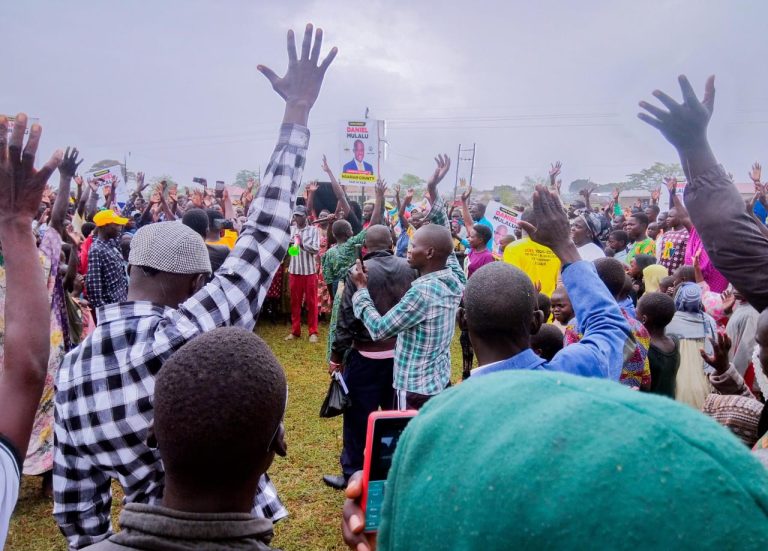
“Most of the time they already know what is in the pipeline because they sit in Parliament where budgets are passed. They then run down to villages with slogans like No Cow, No Vote, yet they know people will eventually be compensated. This new arrangement removes that confusion once and for all,” Latiff said.
Despite the optimism, opposition leaders remain unconvinced that restocking should replace compensation.
Soroti City Woman MP and Forum for Democratic Change (FDC) leader Joan Alobo Acom, who has been spearheading the No Cow, No Vote campaign, criticized the announcement as political maneuvering.
Writing on X, Alobo said: “While the idea of inclusion is more appealing to the ears, the Vice President has been given 30 days for consultations. But again, consultations? This should not nullify the need for compensation. Yes, I agree every Iteso household should be supported, but government must also compensate first.”
She likened the new move to “the same song sung differently” and warned against erasing the historical injustices families faced.
The cattle compensation program dates back to the early 2000s, when victims of insurgencies and cattle rustling in Northern and Eastern Uganda petitioned government to make good on its promise to repay losses.
Courts awarded billions in settlements to groups of claimants from Teso, Lango, and Acholi.
However, the payments were marred by selective disbursement, alleged ghost claimants, and corruption scandals. Some individuals reportedly received tens of millions of shillings, while the majority of war victims remained uncompensated.
Parliament has debated the issue countless times, with MPs from the region staging protests and threatening electoral boycotts.
The No Cow, No Vote campaign gained traction in Teso as residents expressed frustration over decades of broken promises.
President Museveni’s latest pronouncement appears aimed at breaking this political deadlock.
By moving from monetary compensation to uniform restocking, the government hopes to provide a more sustainable and equitable solution that reaches every household.
Political analysts argue that while the President’s decision has broad appeal, its success will depend on proper implementation.
“Restocking sounds fair because it eliminates corruption associated with cash payments,” said Andrew Otim, a political analyst based in Soroti. “But government must ensure the program is transparent, community-based, and free from political manipulation. Otherwise, the same mistrust will resurface.”
He noted that rehabilitation must go beyond livestock.
“Communities also need improved veterinary services, water for production, and markets for their produce. Simply handing out cows will not end poverty unless it is linked to broader agricultural support,” Otim added.
Vice President Jessica Alupo has been tasked with leading consultations and designing the implementation framework within 30 days.
Communities across Teso and neighboring regions are eagerly awaiting details, how many cows each household will receive, when distribution will begin, and whether households already compensated will be excluded.
As Emorimor summed it up: “At least now, all homesteads will benefit. That is better than a few families walking away with millions while their neighbors suffer. Our people want fairness, and this decision brings us closer to that.”
For advertising or to run your news article, contact us on 0785674642 or email; tesonewsnetwork@gmail.com.
About Author