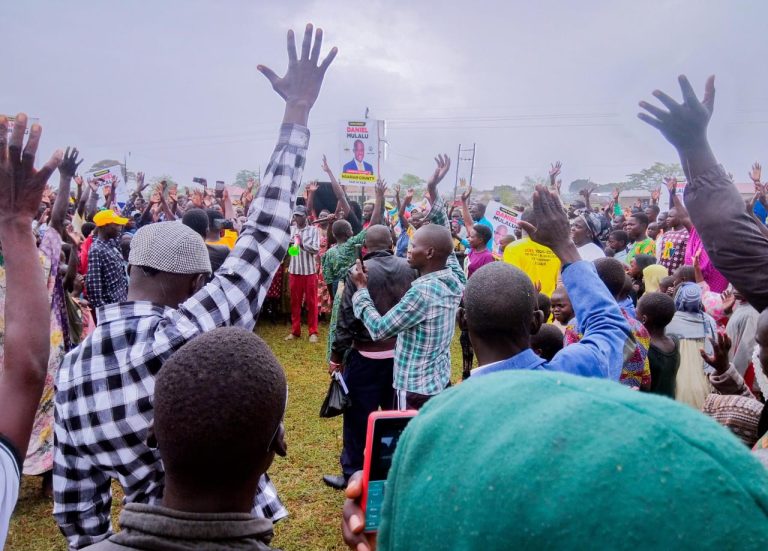

Tensions between resident communities and nomadic cattle herders have reached a breaking point in Kapelebyong District after the District Chairperson, Akorikin Francis, issued a firm directive to security agencies to completely remove all Balalo pastoralists from the district within 10 days.
In a letter dated 14th August 2025 and addressed to the Resident District Commissioner (RDC) of Kapelebyong, Akorikin cited the persistent violations of community land rights and agricultural activity by the Balalo herders.

The letter was also copied to key security and administrative offices, including the Minister of State for Teso Affairs in Kampala, the Chief Administrative Officer (CAO), the District Internal Security Officer (DISO), the District Police Commander (DPC), the 3rd Division Commander of the UPDF in Moroto, the Brigade Commander in Kapelebyong, the District Speaker, and all sub-county chairpersons in the district.

The directive, titled “Implementation of the Executive Order No. 2 of 2025 on Unplanned, Indisciplined Movement and Settlement of Balalo Pastoralists in Kapelebyong District”, draws directly from presidential orders that have long sought to regulate or eliminate free-ranging cattle movements in parts of Northern, Eastern, and North-Eastern Uganda.
“The President of Uganda has repeatedly issued Executive Orders instructing responsible authorities, particularly District Security teams, to fully stop and ban completely any movement of free-ranging livestock by Balalo pastoralists in Northern, Eastern, and North-Eastern Uganda,” Akorikin emphasized in his letter.

According to Akorikin, his office has been inundated with numerous community complaints about the Balalo herders’ activities.
Residents accuse them of grazing their cattle in crop fields, destroying harvests, and provoking confrontations with local farmers.
“The Balalo cattle keepers, with arrogance, are grazing in people’s crop fields and causing untold suffering and conflict in communities where they stay,” Akorikin wrote, highlighting the social unrest the pastoralists’ presence has triggered.
Kapelebyong, like much of the Teso sub-region, operates under a customary land tenure system, which vests land ownership in communities rather than individuals.
Akorikin noted that most of the alleged land sales and leasing agreements involving Balalo herders contravene Uganda’s legal framework on customary land.
This, he argued, undermines local authority and community cohesion while fueling disputes over land boundaries and ownership.
Akorikin has tasked the RDC to coordinate with the police, army, and other relevant agencies to develop and implement a harmonized exit plan for all Balalo herders currently in Kapelebyong.
The process, he stressed, should be carried out within ten days from the date of the directive.
He also issued three key instructions to both the security forces and community leaders; ensure that no additional Balalo cattle keepers are allowed into Kapelebyong for any reason, Local leaders must not formalize any land sales or leases involving customary land with Balalo herders, and all Balalo herders within the district should be reported to GISOs and relevant government authorities for action.
Akorikin appealed to the people of Kapelebyong to cooperate fully with the security teams in ensuring a peaceful but decisive enforcement of the order.
“Let’s cooperate and implement the Executive Order issued by the President of Uganda,” he urged.
The Balalo are pastoralist cattle keepers, many originally from western and parts of central Uganda, known for their large herds and nomadic grazing practices.
While their movements are often driven by search for pasture and water, their arrival in crop-farming regions has sparked recurring land and resource conflicts across several districts in Northern and Eastern Uganda.
President Yoweri Museveni’s Executive Order No. 2 of 2025 was a reinforcement of earlier directives intended to curb the “unplanned, indisciplined movement” of livestock and prevent clashes between herders and farming communities.
The President argued that while pastoralism is a legitimate economic activity, it must be conducted in a way that respects land ownership laws, environmental protection measures, and community rights.
Several districts, especially in Acholi and Lango sub-regions, have implemented similar bans and evictions, often accompanied by tense stand-offs between herders and local residents.
In some cases, pastoralists have accused district leaders of targeting them unfairly, while communities insist that their livelihoods and safety are at risk.
The LCV Chairperson’s order puts the onus on the District Security Committee, which includes the RDC, DISO, DPC, and UPDF commanders, to ensure a smooth and non-violent enforcement.
However, past efforts in other regions have faced logistical challenges, including identifying genuine landowners, verifying claims of legal settlements, and avoiding escalation into violent confrontations.
Given Kapelebyong’s proximity to the Karamoja sub-region, where armed cattle rustling and cross-border livestock movements remain security concerns, the move is likely to attract close monitoring from both regional and national authorities.
The Balalo question remains one of the most contentious rural land management issues in Uganda, balancing the economic value of cattle rearing with the need to protect farming livelihoods and customary land systems.
For advertising or to run your news article, contact us on 0785674642 or email tesonewsnetwork@gmail.com.
About Author