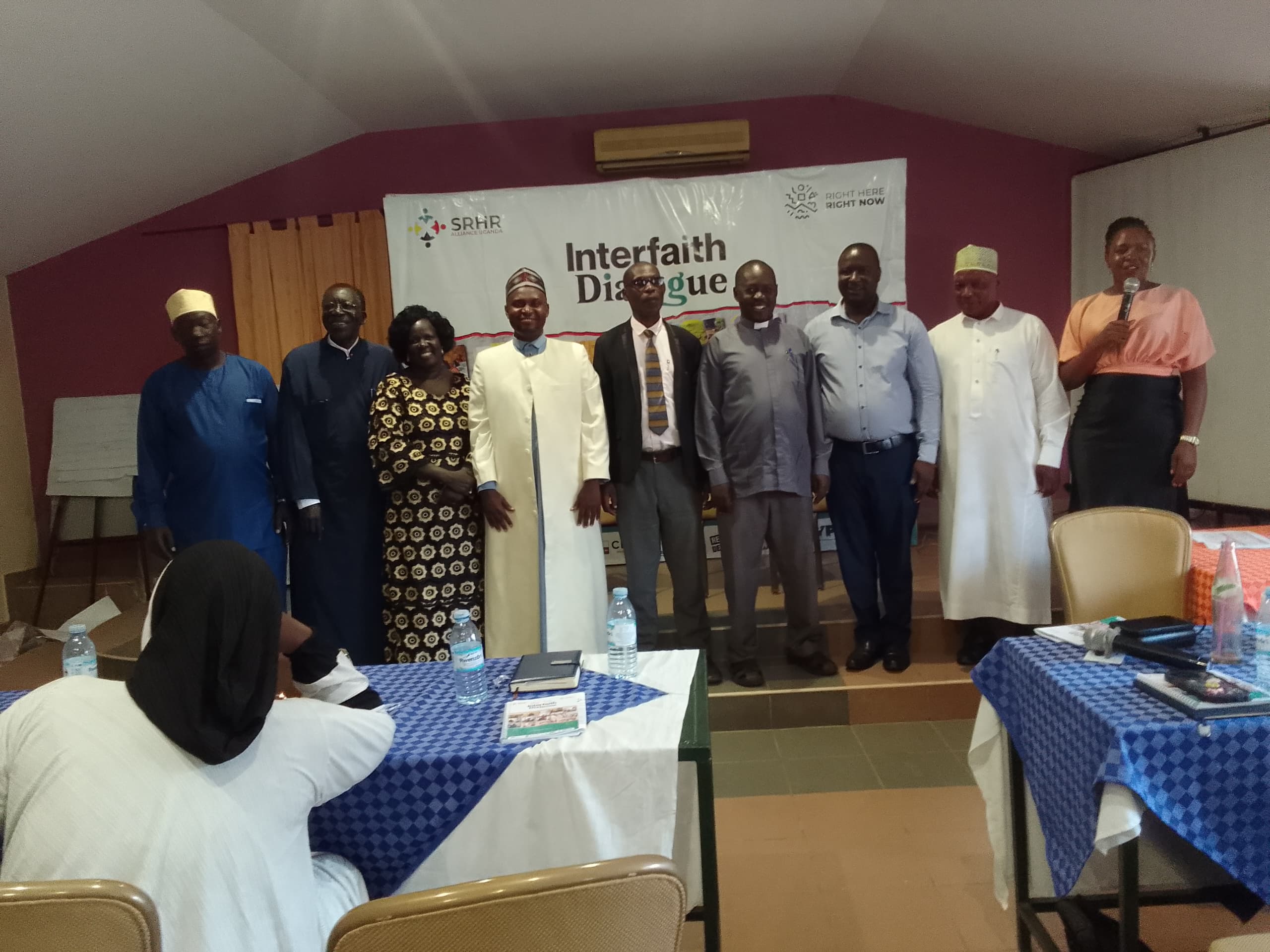
The Regional Assistant to the Mufti for the Teso-Karamoja Muslim Region, His Eminence Sheikh Obilan Abubakar Umar, has called upon all religious leaders in Uganda, regardless of denomination, to intensify efforts and teachings aimed at combating adolescent mental health challenges that continue to devastate the youth population.
Speaking during the 2025 Regional Inter-Faith Dialogue held at Soroti Hotel, Sheikh Obilan urged religious leaders to take an active role in addressing the mental health crisis affecting Uganda’s youth.

The high level gathering brought together faith leaders from across the country to discuss and seek lasting solutions to the growing issue of youth mental health.

Sheikh Obilan highlighted key concerns such as alcoholism, drug abuse, stigma, early pregnancies, sexual abuse, stress, and financial hardship issues he said are becoming rampant among adolescents.
He referred to the 2024 Population Census which revealed that over 73% of Uganda’s population is under the age of 30, with a significant portion affected by mental illness calling for urgent intervention through faith based teachings and increased sensitization.

“The mental health challenges facing our youth today stem from a breakdown in parenting, community, and cultural leadership,” Sheikh Obilan stated.
He also added that in the past, a child was raised morally upright through the collective responsibility of parents, families, and community leaders but today, globalisation and digitalisation have disrupted that structure.
He emphasized that many children are now raised by housemaids of whom dropped out of school or are being shaped by television and digital content, while parents are too busy workinghis, this has led to the rise of morally misguided youth.
Sheikh Obilan further criticized the tendency of parents to fail in implementing their parenting roles, leaving religious leaders and teachers to bear the responsibility of moral guidance.
“Despite continuous preaching and teaching, the moral behavior of our youth continues to deteriorate this is evidence that parents are failing in their role,” he added.
He challenged religious leaders to review and transform their moral and spiritual curriculam to address the crisis of moral degeneration.
Additionally, he called for unity, mutual respect, and the setting aside of religious divisions to focus on the current realities affecting young people.
“Eighty-five percent of what is in the Bible is also in the Quran, let us not emphasize the 15% difference, we need to close the gap and focus on the common goal of saving our youth,” Sheikh Obilan said.
Adding to the discussion, Enos Magumba Amos of the Missioners of Christ Ministries International in Iganga emphasized the need for religious leaders to create more sessions during sermons that focus on youth challenges.
“We must move beyond only preaching about Jesus and God to also address the daily realities affecting our youth, they need inspiration, guidance, and solutions to their problems,” he said.
Ignatius Ongodia, a representative from the Teso Religious Leaders’ Efforts for Peace and Reconciliation (TERELEPA), reiterated that young people remain the most affected by mental health issues.
He called for collaborative resolutions that safeguard youth rights and promote their involvement in religious and moral teachings.
“As religious leaders, we are also moral guides, we must advocate for youth inclusion in teachings and develop strategies to fight moral degeneration and improve adolescent mental health,” Ongodia concluded.
About Author