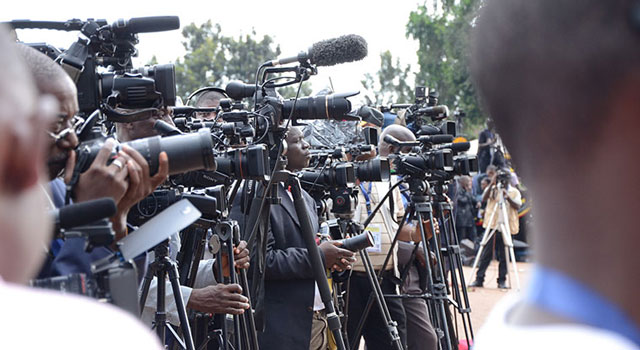
Climate experts have urged media practitioners across Africa to strengthen their capacity to debunk climate misinformation and clearly communicate the growing links between climate change and public health.
Speaking during a regional climate dialogue organized by Media for Environment, Science, Health and Agriculture (Mesha), Mweetwa Mudenda, a Public Health Researcher and Specialist in Lusaka, Zambia, called for deliberate investment in training journalists to better interpret scientific data, expose myths, and shape public understanding of what he termed “a global health emergency.”
Mudenda noted that journalists occupy a powerful space in shaping public attitudes and influencing policy direction, and therefore must be well-equipped with accurate scientific knowledge to counter the widespread climate myths circulating across traditional and digital media platforms.

“Journalists must know the facts, avoid misconceptions, and learn how to communicate climate-health realities with precision,” Mudenda emphasized, warning that misinformation continues to fuel public confusion and delay action.
“The media plays a decisive role in shaping perceptions. What they choose to highlight determines whether the public views climate change as an abstract environmental issue or a real threat to human life.”

Underscoring his message with global data, Mudenda reiterated that climate change is now widely recognized as a health emergency, not just an environmental crisis.
He revealed that: Heat-related deaths have risen by 23% since the 1990s, now claiming more than 546,000 lives annually, Wildfire-related deaths hit 154,000 in 2024 alone, and vector-borne diseases, including malaria and dengue, have experienced a 49% rise in transmission.
Others are; Food and water-borne diseases contribute to an estimated 250,000 deaths yearly, Africa is projected to face more than 14.5 million climate-linked deaths by 2050 if warming trends continue, and Vulnerable groups face 15 times higher mortality during extreme weather events, a grim reminder of widening climate inequality.
Mudenda also highlighted the rising mental health burden associated with climate shocks such as floods, droughts, and heatwaves. Cases of depression, anxiety, and post-traumatic stress disorder (PTSD) are climbing rapidly, particularly among communities experiencing repeated displacement or loss of livelihoods.
“Climate change burdens every layer of public health,” he said. “It affects water safety, food supplies, disease patterns, maternal health, and even increases gender-based violence during disasters. Journalists need to help the public understand this direct connection.”
Mudenda stressed that one of the biggest barriers to climate action is misinformation.
He listed two major misconceptions that journalists must actively counter: The myth that scientists disagree on climate change and the failure to link climate change to extreme weather events.
Journalists, he said, should draw clear connections between climate trends and phenomena such as heatwaves, severe storms, droughts, and flooding.
“False balance in reporting is dangerous,” he warned. “Journalists should not treat scientific facts and denialist opinions as equal. That only confuses the public and weakens the urgency of action.”
Mudenda’s remarks were aligned with insights emerging from global climate discussions ahead of COP30, where health outcomes have gained prominence in climate strategy.
He outlined several priority actions journalists should highlight and advocate for:
- Embedding health outcomes into climate strategies across energy, transport, food, and natural ecosystems.
- Securing long-term, predictable climate finance without increasing adaptation-related debt.
- Strengthening cross-ministerial coordination to align mitigation, adaptation, and public health planning.
- Participating in climate policy design, especially around clean cooking, air quality, heat-risk planning, and water security.
- Applying resilience metrics that track disease risk, disaster exposure, and health system capacity.
- Elevating health co-benefits to strengthen climate action credibility and funding.
- Promoting clean cooking technologies, heat preparedness, sustainable mobility, and resilient food systems.
- Building local resilience through early warning systems, wildfire management, and coastal protection.
- Supporting Indigenous and community leadership in ecosystem stewardship.
“These actions must be communicated consistently so that the public sees climate change not as distant science, but as something shaping their daily health and survival,” Mudenda said.
Mudenda raised additional alarm over how climate shocks intensify HIV vulnerability and undermine sexual and reproductive health rights (SRHR).
He explained that extreme weather events such as floods disrupt health services, increase unsafe pregnancies, and expose women and girls to greater risks of gender-based violence.
“Climate change is stripping away hard-won gains in SRHR. Journalists must bring this to the forefront,” he stressed.
Mudenda also reflected on how global political decisions shape climate outcomes.
Drawing on the example of the United States, he reminded journalists that the world’s largest economies significantly influence global climate policies.
He traced the history of U.S. engagement, from the Kyoto Protocol (1997) to the Paris Agreement (2015), noting the temporary withdrawal in 2017 and the re-entry in 2021. Such political swings, he said, disrupt global momentum and strain international cooperation.
“These shifts affect global finance, ambition levels, and trust,” he said. “Journalists must understand these dynamics to explain them meaningfully to local audiences.”
Policy and Legal Enthusiast Harry Simuntala echoed Mudenda’s call, urging journalists to embrace evidence-based reporting that resonates with local communities.
“Climate change should be reduced to everyday realities,” Simuntala said. “Reduce Climate Change Talk for a person to understand, like how it affects drinking water, food security, nutrition, and livelihoods. When people understand what is happening in their homes, they pay attention.”
Simuntala added that civil society will continue to push for accountability, equity, and real protection for communities suffering the greatest health and climate risks.
In their concluding remarks, the experts emphasized three key takeaways for journalists and policymakers:
- Climate change is a present health emergency, driving extreme heat illness, malnutrition, mental health crises, and infectious diseases.
- Solutions and co-benefits already exist, including clean energy, active transport, and resilient health systems, but implementation is far too slow.
- This moment demands action, not talk, with civil society, government, and media working hand in hand to protect vulnerable populations.
As Mudenda put it, “Science is clear. It is not silent. Political promises are loud, but it is time for those promises to materialize into measurable change.”
About Author