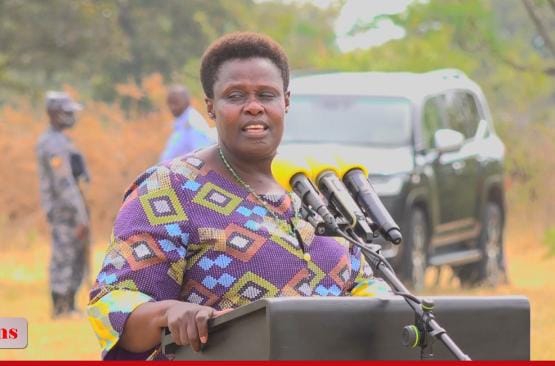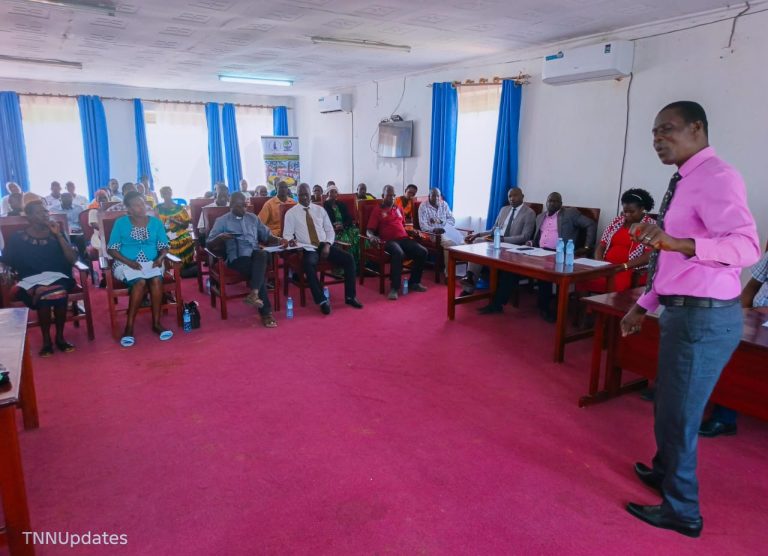

The outgoing Soroti City Mayor, Joshua Edogu, has challenged civil society organisations (CSOs) operating in the Teso sub-region to deliberately empower smallholder farmers as a pathway to growing Uganda’s economy, as the Ateker Development Foundation (ADEFO) rolled out Phase II of its Multi-Actor Agribusiness Platform (MAP) in Soroti City.
The project launch signals a major boost for farmers in the city, with close to 600 smallholder farmers in Soroti City expected to benefit directly from interventions aimed at strengthening agricultural production, value addition and market access.
Addressing stakeholders, farmers and development partners, Mayor Edogu lauded SOCADIDO, the local implementing partner, for returning with a second phase of the project through a broad partnership with local and international actors.

“I laud SOCADIDO for this new development. They are coming with another phase through a partnership with their friends, and the idea is to deal with small-scale farmers, from production to consumption,” Edogu said.

He emphasized that between production and consumption lie numerous commercial activities that, if properly harnessed, can significantly uplift household incomes and strengthen the national economy.
“When you look at Uganda as a country, and Teso in particular, you discover that the majority of our people are involved in small-scale farming. This is their livelihood and source of income,” he noted.
The Mayor stressed that agriculture must translate into real improvements in people’s lives, urging families to make productive use of farm incomes.
“Income comes in, but it is up to the father, the mother and the family to put this money to the right use so that lives improve. That is why this project is important, and as a leader, I fully agree with it,” he said.
He pointed out that the success of the project would depend largely on access to correct and practical information by farmers.
“Number one, farmers must get information. Number two, the information must be useful and applicable so that the project succeeds and improves value chains as we deal with productivity,” Edogu emphasized.
Mayor Edogu pledged Soroti City’s full support to the ADEFO-SOCADIDO partnership, particularly in awareness creation and community mobilisation.
“As a city, we are in agreement. We are going to support the project, support SOCADIDO, and work closely together to ensure awareness and results at the end of the process,” he said.
He highlighted that Uganda’s public service can only absorb a small fraction of the population.
“We have less than 500,000 people in the civil service. The rest are on their own. These are the people we are targeting,” he explained.
According to Edogu, sustainable economic growth and improved Gross Domestic Product (GDP) can only be achieved by empowering citizens engaged in productive, income-generating activities, particularly agriculture.
“The wealth of a country depends on its productive people. If we are talking about peasants, then empowering them is the right thing to do,” he said.
The Mayor challenged CSOs in Teso to move beyond isolated interventions and instead deliberately empower farmers along the value chain.
He called for better management of agricultural produce, noting that many farmers invest heavily in production only to struggle with poor markets and post-harvest losses.
“Our farmers put in a lot of effort, but they still struggle due to lack of markets. Proper value chain management is key,” he said.
Edogu added that while government is investing more resources to transform smallholder farming, coordinated efforts by NGOs and CSOs would significantly supplement state interventions.
Daniel Akudu, Programmes Manager at SOCADIDO, described the launch as a major milestone for the people of Soroti City.
“This launch signifies a greater milestone of the project for the people of Soroti City. We are committed to working closely with the city leadership and farmers,” Akudu said.
He revealed that SOCADIDO is in the process of signing a Memorandum of Understanding (MoU) with Soroti City leadership to formalise operations and strengthen coordination.
According to Ben Boham Okiror, Coordinator of ADEFO, the project will run from November 1, 2025 to October 31, 2029, with SOCADIDO as the local implementing partner.
The project is funded by Sign of Hope and the German Federal Ministry for Economic Cooperation and Development (BMZ), with a total budget of UGX 4.116 billion.
Across the Teso sub-region, the project will directly support 3,600 smallholder farmers, 60 percent of whom are women, and indirectly benefit at least 64,800 people.
A feasibility study conducted under ADEFO revealed several challenges facing farmers in Soroti City and the wider Teso sub-region.
“These challenges demand collective action and innovation across the value chain,” Okiror said.
Okiror noted that ADEFO aims to expand into a locally anchored and institutionalised Multi-Actor Partnership (MAP) capable of sustaining agricultural development beyond donor funding.
The platform seeks to improve cooperation, coordination and joint knowledge building among CSOs, government agencies, private sector actors, research institutions and farming communities.
Gender inclusion remains a core pillar of the project. Traditional gender roles continue to limit women’s control over resources and leadership, despite their dominance in agricultural labour.
To address this, the project commits to; 60 percent women among direct beneficiaries, and At least 40 percent female representation in MAP leadership roles among others
Speaking on behalf of SOCADIDO, Rev. Fr. Michael Omaria reiterated that the project’s strength lies in partnership.
“The German government and Sign of Hope supported this idea because it aligns with Sustainable Development Goal 17, building partnerships,” he said.
He explained that ADEFO brings together organisations with diverse strengths, from production and productivity to training, WASH and conflict resolution, under one development agenda for Teso.
As Phase II of the ADEFO MAP takes root in Soroti City, leaders and stakeholders agree that empowering farmers, strengthening value chains and fostering partnerships will be critical in transforming agriculture into a driver of inclusive economic growth.
About Author