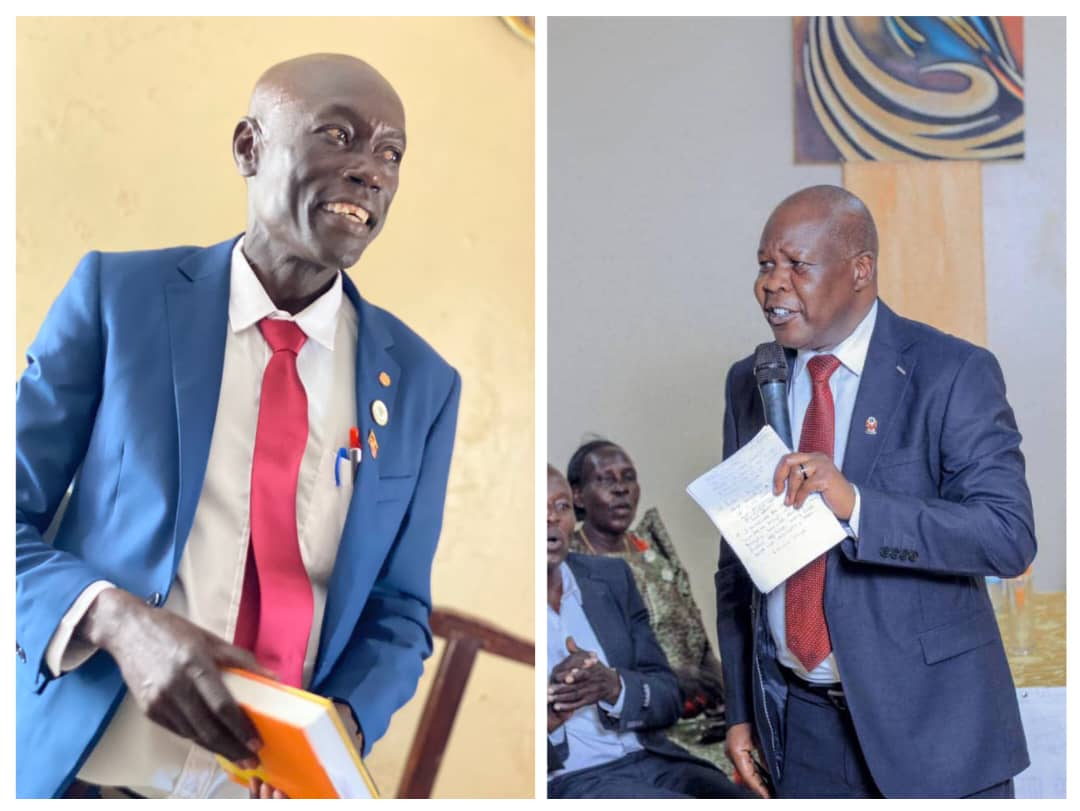
Renowned education administrators Martin Okiria Obore and Wilfred Oluka Okeriau have officially reconciled, putting an end to a protracted feud that had threatened to divide the region’s education fraternity.
The two influential figures, Okiria, a former national chairperson of the Association of Secondary School Headteachers of Uganda (ASSHU), and Okeriau, headteacher of Soroti Secondary School and former ASSHU Teso chapter chairperson, were embroiled in a bitter disagreement rooted in leadership transitions, personal misunderstandings, and institutional dynamics.

Their fallout dates back to the contentious circumstances surrounding the leadership and management of Soroti Secondary School.

Okeriau’s takeover of the school reportedly triggered unease among some senior members of ASSHU Teso, with divisions surfacing over the handling of leadership roles and alleged breakdowns in communication.
Tensions were further inflamed by public criticisms directed at Okeriau’s administration, some of which came from those perceived to be aligned with Okiria.

Matters were worsened by inflammatory social media commentary, reportedly posted by Okeriau’s then-deputy, which fueled perceptions of disrespect and deepened the existing cracks within the leadership circle of secondary school heads.
The atmosphere became increasingly polarized, with camps forming within the association and efforts at mediation failing to yield results, until now.
The reconciliation, announced jointly by the two educators during a closed-door meeting attended by select headteachers and education stakeholders in Soroti City, marks a remarkable shift.
Both men reportedly acknowledged past mistakes, expressed mutual respect, and emphasized their commitment to moving forward in unity.
“We have realized that our differences were detrimental not just to us as individuals, but to the broader ASSHU Teso family,” said Okiria in a brief post-meeting statement.
“We have chosen to put the interests of learners, teachers, and institutions ahead of personal grievances.”
Okeriau, in his remarks, echoed similar sentiments, emphasizing the need for collective leadership and integrity within the education sector.
“Reconciliation is not a sign of weakness, it is a mark of maturity. I am glad that we can now focus on rebuilding trust and working as a team to strengthen education in our region.”
Their handshake and joint commitment have been met with overwhelming approval from fellow headteachers, district education officers, and community leaders across Teso.
Many see the moment as one of healing and restoration, especially at a time when secondary schools are facing critical challenges in enrollment, academic performance, teacher morale, and infrastructure development.
Several stakeholders also praised the maturity and humility demonstrated by both Okiria and Okeriau in resolving their dispute through dialogue.
Others urged the wider ASSHU community to emulate the gesture and begin afresh with renewed purpose.
The two leaders have since pledged to co-chair an upcoming Teso ASSHU regional conference aimed at developing a five-year strategic plan for improving academic standards, promoting professional development, and advocating for increased government support to schools in underserved areas.
They also plan to establish a joint leadership mentorship program to guide emerging headteachers on ethics, conflict resolution, and transformative school management.
About Author