
Leaders in Soroti District have called for a fundamental mindset shift toward commercial farming as the Ateker Development Foundation (ADEFO), through its implementing partner SOCADIDO, officially rolled out Phase II of the Multi-Actor Agribusiness Platform (MAP) aimed at strengthening agricultural value chains and improving livelihoods for smallholder farmers.
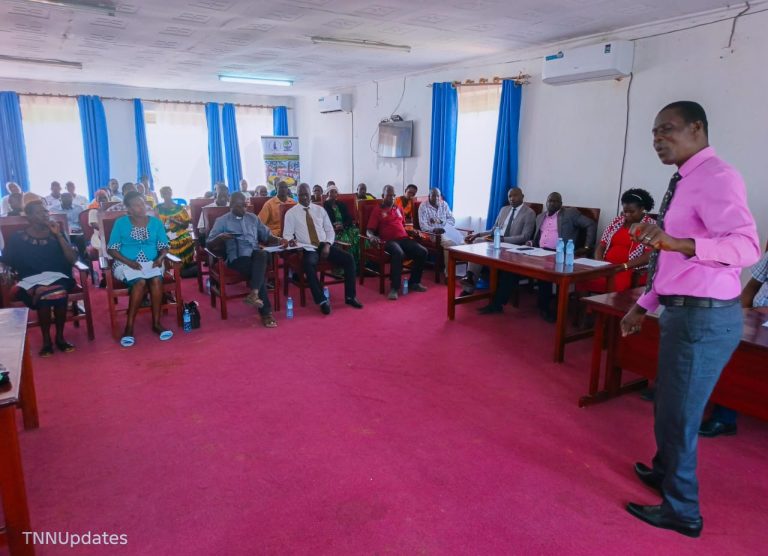
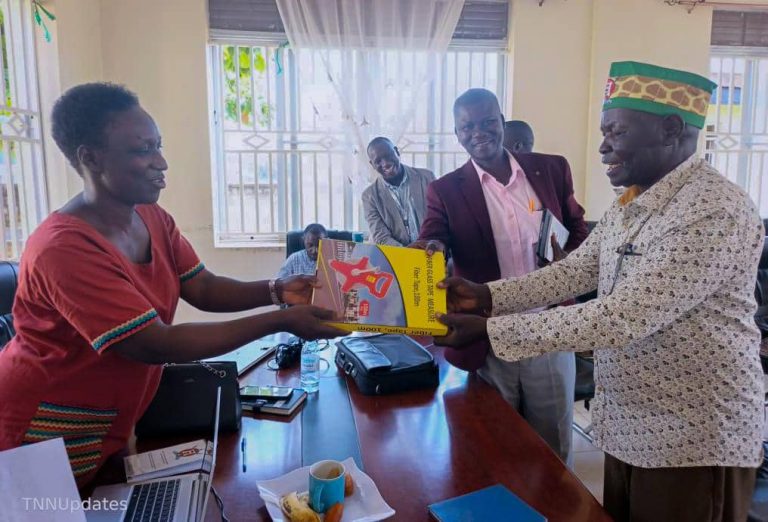
The project launch, held in Soroti and attended by district political leaders, technocrats, extension workers, civil society actors and farmers from Awaliwal and Ocokican sub-counties, marked the beginning of a four-year intervention targeting sustainable agriculture, value addition and market access.
Speaking at the launch, Mutai Victor, the Assistant Resident District Commissioner (RDC) for Soroti District, welcomed ADEFO and its development partners, pledging full district cooperation.

“I want to thank the team from our development partners who have wished to work with Soroti District. We welcome you and promise that we are going to work with you,” Mutai said.

He noted that while the project covers several districts in the Teso sub-region, Soroti was ready to fully embrace the intervention and align district structures to ensure its success.
Drawing from personal experience, Mutai stressed the need to change perceptions around farming, particularly among men.
“Me personally, I am a farmer. I come from the Sebei sub-region, but what I do most is farming. The salary I get, I treat it as seed capital to multiply income,” he said.
He questioned why agriculture, now widely recognized as a business opportunity, has largely been left to women.
“The funder is targeting 60 percent women out of the 3,600 households because women are the ones participating in agriculture. But what about the men? Why have we left this very serious venture of farming to women?” he asked.
Mutai argued that political distractions have kept men away from productive work and urged extension workers to spearhead mindset change.
“The political season is finished. Now the rainy season is coming. Men must be told that farming is business. Something must be done about this mindset,” he emphasized.
To improve extension service delivery, the Assistant RDC proposed the establishment of demonstration farms in every sub-county.
“Extension workers cannot reach every farmer. Each extension worker should hire land or use government land to set up a demonstration garden where farmers can learn spacing, fertilizer application and best practices,” he said.
He added that demonstration farms would improve adoption of modern agricultural practices, improve quality and enhance competitiveness in increasingly demanding markets.
“What we produce must be of high quality, and quality comes from applying the right agricultural practices,” Mutai noted.
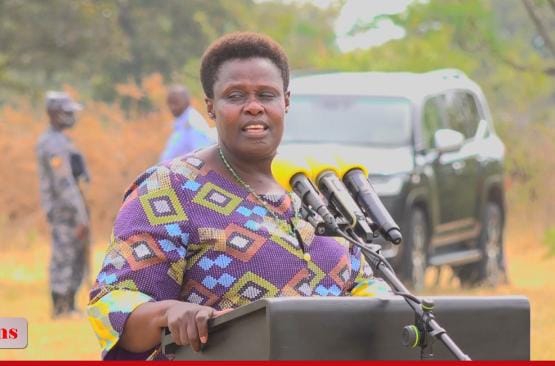
Jessica Florence Akiteng, District Woman Councillor for Aukot Sub-county and Secretary for Production and Natural Resources, applauded SOCADIDO and ADEFO for deepening collaboration with Soroti District.
“We worked with you in Phase I, and now again we have come together for Phase II. I can already see that our farmers have progressed,” Akiteng said.
She noted that farmers who benefited from the first phase had improved knowledge, better farm practices and stronger engagement with value chains.
“In this second phase, we join hands as political leaders, technical teams and farmers to ensure that production improves, markets are accessed and livelihoods are sustained,” she said.
Akiteng also appealed for the expansion of the project to other sub-counties.
“We would wish that these programs extend to others. Help us lobby the funders so that all our sub-counties are covered,” she urged.
According to Ben Boham Okiror, the Coordinator of ADEFO, the project will run from November 1, 2025 to October 31, 2029, with SOCADIDO as the local implementing partner.
It is funded by Sign of Hope and the German Federal Ministry for Economic Cooperation and Development (BMZ).
The total project budget stands at UGX 4.116 billion, targeting 3,600 smallholder farmers, 60 percent of whom are women, and indirectly benefiting at least 64,800 people across the Teso sub-region.
A feasibility study conducted under ADEFO highlighted persistent challenges affecting farmers, including: Over 95 percent of the population engaged in agriculture, largely at subsistence level, structural food insecurity and multidimensional poverty affecting 56 percent of households, and Heavy reliance on rain-fed agriculture amid erratic rainfall
Other areas of focus are; Pests, diseases and post-harvest losses estimated at 30–40 percent, and Weak market access characterized by informal buyers, low prices and limited bargaining power
“These challenges can only be addressed through cooperation, coordination and joint learning along the value chain,” Okiror said.
Okiror explained that ADEFO aims to evolve into a locally anchored and institutionalised Multi-Actor Partnership (MAP) capable of sustaining agricultural transformation beyond donor funding.
Key project targets include: 3,240 farmers (90%) maintaining or increasing incomes to an average of USD 3.30 per day, 75 percent of cooperatives selling produce at a minimum 25 percent gross profit margin, Improved platform engagement, with 70 percent active participation in working groups, and A more balanced membership structure, with a core group of 10 institutions and over 40 partners.
Gender inclusion remains central to the project’s design.
Traditional gender roles continue to limit women’s access to decision-making, land and leadership, despite women forming the majority of the agricultural workforce.
To address this, the project commits to:
- 60 percent women among direct beneficiaries
- At least 40 percent female representation in MAP leadership roles
- Training two gender focal point persons
- Gender-responsive planning and budgeting within working groups
- Ensuring women’s participation in dialogues and community barazas reaches at least 60 percent
- Gender outcomes will be tracked through ADEFO’s monitoring and evaluation system.
- District Ownership and Knowledge Transfer
Esatu Moses, Principal Assistant Secretary for Soroti District, emphasized the importance of district ownership and knowledge transfer.
“We are here to launch a project that is meant to sustain our main livelihood, agriculture. We must own it,” Esatu said.
He reminded participants that those present were expected to act as information exchange agents.
“You should not go back the same way you came. You must transmit this information to our people. There should be a clear difference between those who accessed information at the source and those who receive it later,” he said.
Esatu also stressed the need for sustainability beyond partner support.
“Even if tomorrow SOCADIDO withdraws, the district must be able to take over. We must develop strategies that ensure continuity,” he added.
Richard Ochom, a staff member at Health Need Uganda and a member of ADEFO, called for stronger accountability mechanisms through data systems.
“The platform will help improve accountability, but we also need a strong database showing specific farmers and enterprises,” Ochom said.
He urged ADEFO and Soroti District to invest in enterprise data systems accessible both physically and online.
Peter Ebau, LCIII Chairperson for Awaliwal Sub-county, pledged full local government support for project implementation.
“Our sub-county will ensure smooth implementation. But we also call for enhanced follow-up and inclusion of those who may not have benefited yet,” Ebau said.
In Soroti District, the project is being implemented in Awaliwal and Ocokican sub-counties, with extension workers, parish chiefs and political leaders playing a key role in coordination.
As ADEFO Phase II moves into implementation, district leaders agree that success will depend on mindset change, coordination, quality production and strong market linkages.
With growing political will, committed partners and an inclusive platform, Soroti District is positioning agriculture not just as a survival activity, but as a competitive and sustainable business capable of lifting households out of poverty.
About Author