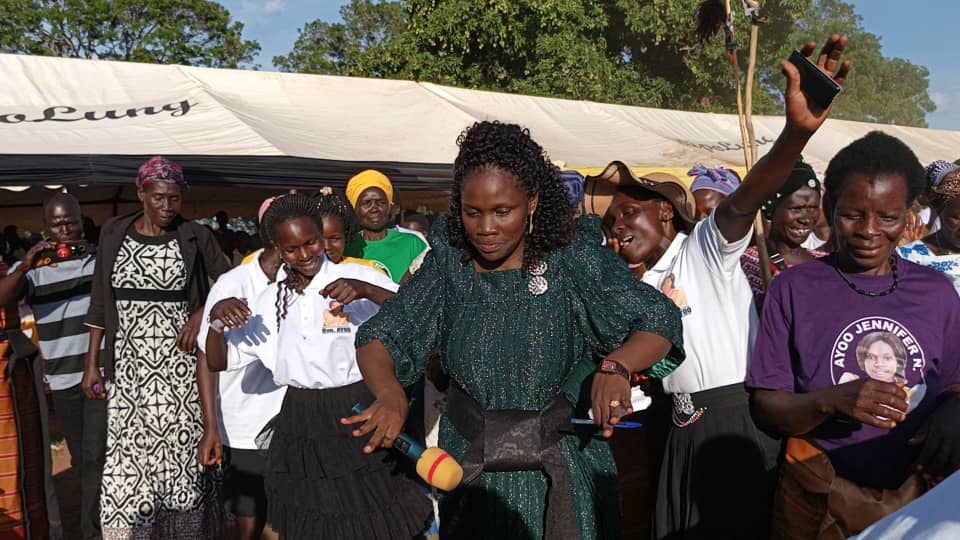
Female Members of Parliament (MPs) from the Teso sub-region have called on the government to provide clearer guidelines on the Generating Growth Opportunities and Productivity for Women Enterprises (GROW) Project, citing a lack of information as a significant challenge to its implementation in rural districts.
The MPs, led by Kalaki District Woman MP Jennifer Ayoo, Ngora District Woman MP Stella Apolot Isodo, and Kapelebyong Woman MP Jacinta Atuto, raised concerns during belated Women’s Day celebrations in Otuboi Town Council, Kalaki District.
They emphasized that many women in their constituencies were unaware of how to access the program’s funds due to inadequate sensitization.

The MPs call came after Kalaki District LCV Mr. Samuel Okello expressed concerns over the GROW Program, stating that while funds are available, the stringent requirements make it difficult for women to access loans.
He pointed out that many rural women lack the necessary collateral, such as land titles or logbooks, which financial institutions demand before disbursing funds.

He emphasized that the loan criteria should be relaxed to accommodate women who have viable business ideas but do not meet the current eligibility standards.
According to him, many women are eager to improve their livelihoods but are discouraged by the bureaucratic bottlenecks that prevent them from benefiting from the initiative.
Okello stressed that without these changes, the GROW Program risks failing to achieve its objective of empowering women and fostering economic growth in Uganda.
According to the Auditor General’s report for the financial year ending June 30, 2024, only Shs18.52 billion of the allocated Shs75.1 billion had been spent.
The report further indicates that the unspent Shs56.6 billion affected the provision of credit to participating financial institutions that were supposed to lend to women entrepreneurs.
MP Ayoo has noted that, in Kalaki even district leaders have limited knowledge about the program, leading to confusion with other government initiatives like the Parish Development Model (PDM).
“The biggest challenge has been the collateral requirements needed to access GROW funds. Many rural women do not have land titles or logbooks as security, making it difficult for them to qualify for loans,” Ayoo stated.
She further explained the distinction between GROW and PDM, clarifying that while PDM targets the ultra-poor, GROW is designed for women who have already started small businesses and need capital to expand.
“GROW is meant for women who already have a running business, even if it’s a small shop or a fridge for selling beverages. But many women are unable to access funds due to stringent requirements,” Ayoo said.
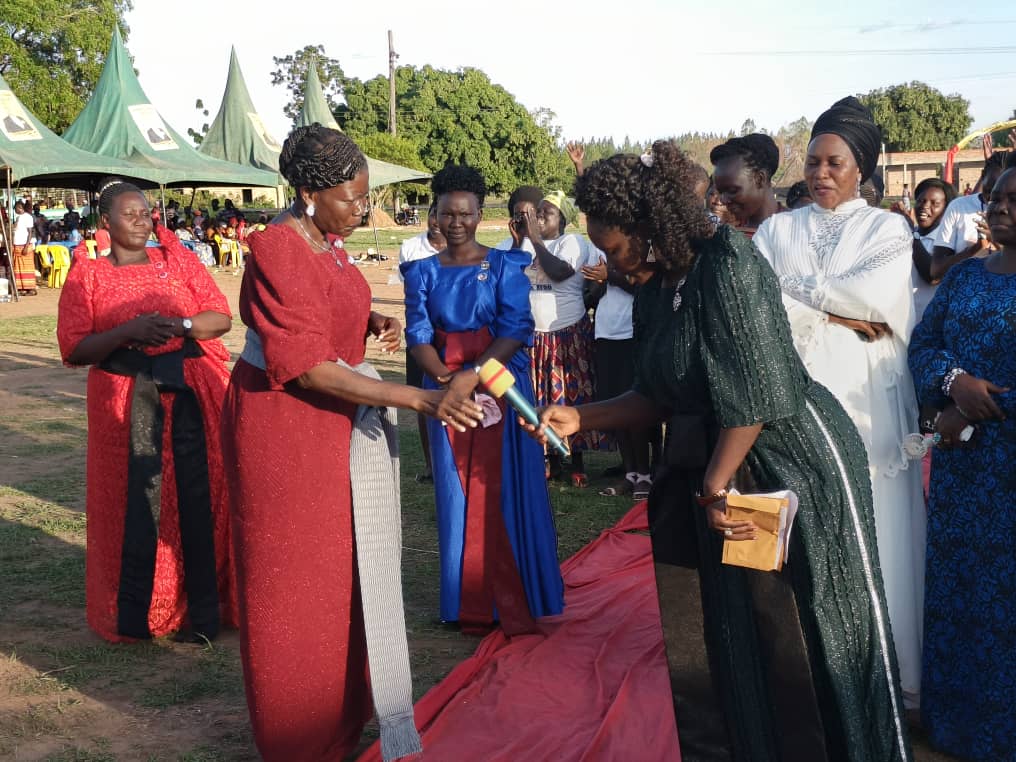
MPs Isodo and Atuto appealed to the Ministry of Gender, Labour and Social Development to carry out massive sensitization campaigns in rural areas to ensure that women understand the eligibility criteria and application process.
“If the guidelines are not widely circulated and simplified, then the GROW project will not achieve its intended purpose,” MP Isodo warned.
MP Atuto also criticized the requirement that applicants must have an existing business for at least one year, arguing that this locks out many aspiring women entrepreneurs.
“Many women want to start businesses but lack records or formal structures. What happens to them?” she questioned.
Appearing before the Public Accounts Committee (PAC) recently, GROW Project Coordinator Dr. Ruth Aisha Kasolo explained that the World Bank had approved Shs120 billion for the two-year project, with additional funds to be disbursed in the next financial year.
“The under-disbursement was due to the project being in its early stages. Agreements with the six participating banks were signed late, which affected implementation,” Kasolo stated.
As of December 31, 2024, a total of 2,175 women across 84 districts and two cities had benefited from the program, with trade and commerce sectors receiving the most support, followed by agriculture, agribusiness, and construction.
Dr. Kasolo also mentioned a presidential directive ensuring that funds are equitably distributed, with priority given to districts that have not yet benefited.
The GROW Project, implemented by the Ministry of Gender, Labour, and Social Development in collaboration with the Private Sector Foundation Uganda (PSFU), aims to transform micro-enterprises into small and medium-sized businesses.
However, for the program to be successful, MPs insist that the government must; Relax collateral requirements to allow more women to access funds, increase awareness campaigns to ensure rural women understand how to benefit from GROW, revise eligibility criteria to accommodate women looking to start businesses and ensure equitable distribution of funds across all districts.
About Author