Uganda’s cultural leaders have attributed the rise in gender-based violence (GBV), domestic violence, and corruption to the disintegration of family values.
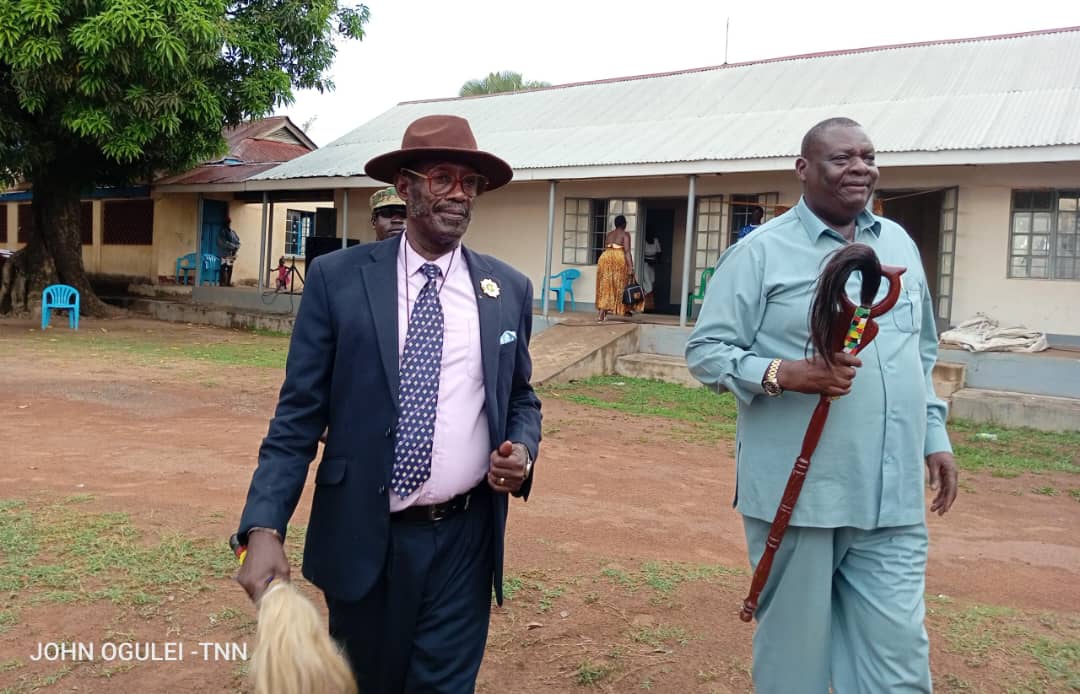
His Royal Highness Paul Sande Emolot, the Emorimor of Iteso Cultural Union (ICU), and His Highness Ssabaluuli Mwogezi, Paramount Chief of Baruuli, called for moral revival and unity to restore societal stability.

Speaking over the weekend at ICU headquarters during a meeting with the Baruuli Cultural Leader, Emorimor Emolot lamented the erosion of traditional family structures, which he said has fueled Uganda’s social and economic challenges.

“Moral Decay is Weakening Our Society. Today, Uganda is faced with so many problems because families are broken down. We’ve got moral decay everywhere,” Emorimor Emolot stated.
“For us to have a prosperous community, for us to have peace, for us to have development, we need peaceful families.”
He reminisced about a time when the Iteso people were among the wealthiest in East Africa, largely due to their strong family bonds and wealth in cattle.
He noted that education was widely accessible because of the economic stability within households.
“The level of illiteracy here was almost zero. Everybody went to school because we had more resources,” he said.
However, the cultural leader decried the rising cases of family disputes, particularly those over land, which he said were once rare but are now turning fatal.
“Those days, we would only hear a case of a land dispute between neighbors. But today, it is between brothers. Every day here, we lose our lives because of land disputes,” he noted, adding that the decline of cultural values has left families fractured.
According to Emorimor, the breakdown of families has also contributed to the increasing number of street children and school dropouts.
“When there is peace between Papa and Toto, children in that family will go to school and excel. In that home, there will be no famine. In that home, they will always fear God,” he stated.
He emphasized the need for cultural institutions, such as churches and traditional leadership, to work together in restoring moral values.
Paramount Chief Ssabaluuli Mwogezi supported Emorimor’s call for family unity, stressing that reconciliation among the people of Teso is essential for development.
“There is a need to end divisions driven by political, personal, and ideological differences,” he said, urging people to prioritize common goals over disputes.
Mwogezi also warned against the unchecked adoption of foreign cultural practices, arguing that they pose a threat to African traditions and values.
“What is killing us, the black people, is Western cultures. Don’t fall in love with them because their aim is eroding our own cultural values,” he said.
He particularly condemned homosexuality, claiming it undermines population growth and weakens African families.
“Homosexuality and lesbianism were brought to Africa by the white men to indirectly control our population so that people can make love without producing,” Mwogezi stated.
He urged the people of Teso to increase their population for stronger political representation and equitable resource distribution.
Furthermore, he encouraged the Iteso to maintain proper records of their population and employment data, noting that such information is vital for economic planning and lobbying efforts.
The cultural leaders’ remarks come amid alarming statistics on gender-based violence, domestic violence, and corruption in Uganda.
According to the Uganda Demographic and Health Survey (UDHS) 2022: Over 56% of ever-married women have experienced spousal violence and 22% of women have suffered sexual violence.
The 2024 Annual Crime Report also indicates that 14,073 reported cases of domestic violence in 2024, a slight drop from 14,681 in 2023.
Despite these figures, support services for survivors remain limited, with many cases going unreported due to fear of retaliation or cultural stigma.
Corruption has also continued to drain Uganda’s economy and weaken public trust in institutions.
A report by the Inspectorate of Government (IG) for 2023–2024 revealed that, Uganda lost Shs9.144 trillion to corruption in just one year.
The highest losses were in environmental resources (Shs2.28 trillion), education (Shs1.46 trillion), and contract royalties (Shs859.2 billion).
The most common forms of corruption include bribery (27%), embezzlement (17%), and favoritism (11%).
Corruption not only depletes public funds but also limits essential services, making it harder for ordinary citizens to access healthcare, education, and infrastructure.
About Author