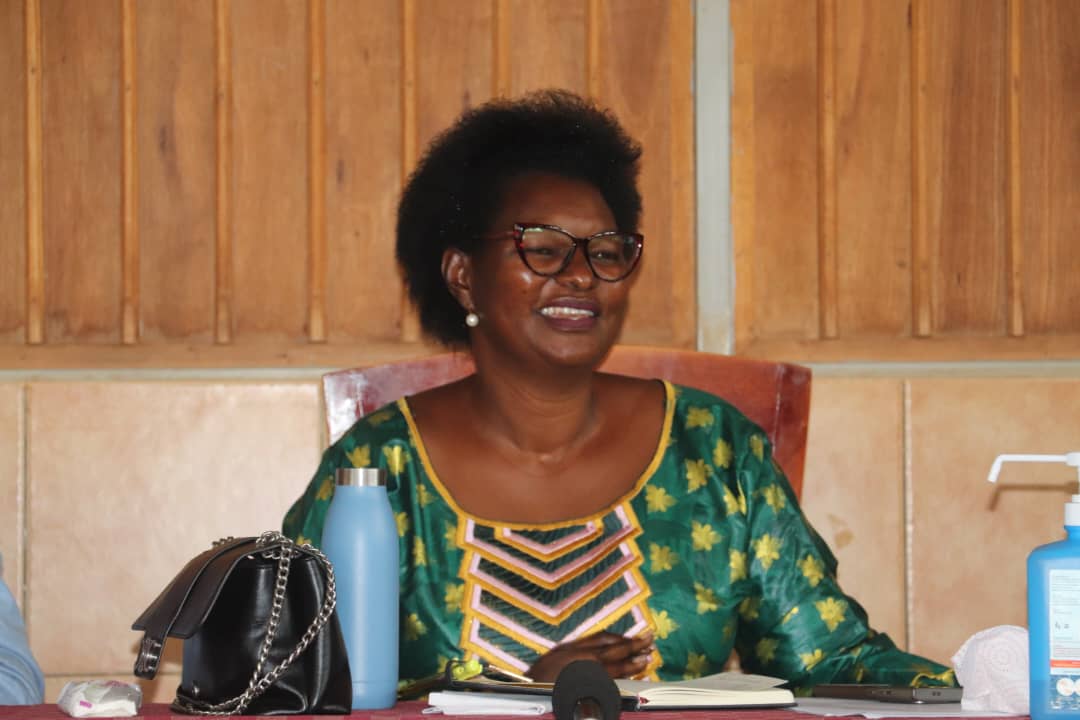
Uganda’s State Minister for Fisheries and Serere District Woman MP, Hellen Adoa, has urged African nations to enhance opportunities for sustainable aquaculture development.
Speaking was during the opening of the African Union Agriculture Summit on “Strengthening the Fisheries & Aquaculture Sector in Africa.”

Adoa emphasized the need to harness Africa’s vast marine resources to drive development and contribute to the achievement of sustainable development goals and the African Union’s Agenda 2063 ambitions.

Minister Adoa highlighted the continent’s immense potential, noting that Africa’s rich marine and freshwater resources could transform fisheries and aquaculture into significant drivers of economic growth, food security, and job creation.
She pointed to the new 10-year Comprehensive Africa Agriculture Development Programme (CAADP) action plan as a vital framework for aligning fisheries and aquaculture development with the African Union’s Policy Framework and Reform Strategy for Fisheries and Aquaculture (PFRS) and the Africa Blue Economy Strategy (ABES).

“The fisheries and aquaculture sectors hold the key to unlocking sustainable livelihoods and boosting Africa’s economic growth,” Adoa said.
“By strengthening governance, fostering regional collaboration, and empowering stakeholders, we can create resilient and sustainable fisheries and aquaculture ecosystems.”
Adoa also emphasized the importance of robust governance mechanisms in fisheries and aquaculture.
She called for improved coordination and cooperation among African countries to enhance sustainable management of fisheries and aquaculture, Alignment of local, regional, continental, and global instruments to ensure coherence in policies and practices.
She also called for utilization of the African Fisheries Reform Mechanism to bolster governance and engage stakeholders at national and regional levels.
She also stressed the need for evidence-based decision-making, operationalizing AFAData systems, and fostering collaboration with Centers of Excellence (CoEs) to produce knowledge-based solutions for effective fisheries and aquaculture management.
The minister in her speech also called for enhanced regional collaboration and partnerships, including: Working with the African Union’s regional institutions and aquaculture non-state actors (NSAs) and collaborating with AU-recognized Centers of Excellence for Fisheries and Aquaculture.
She further appealed for Support to regional economic communities (RECs) and regional fisheries bodies (RFBs) and Promotion of harmonized regional reporting and aligning CAADP Biennial Review indicators with Sustainable Development Goals (SDGs).
Adoa also highlighted the need for capacity building in fish disease management, laboratory strengthening, and adopting a One Health approach to address public health and environmental challenges in aquaculture.
The minister underscored the significance of addressing gaps in fish value chains and aligning aquaculture development with ecosystem-based approaches.
She called for technical support to strengthen aquaculture extension services and enhanced collaboration with organizations such as WOAH, WHO, and UNEP.
And further, building capacity in aquaculture value-chain alignment and regional networking for animal health laboratories.
Minister Adoa also stressed the importance of involving the private sector and non-state actors in aquaculture development.
She highlighted the potential of public-private partnerships (PPPs) in fostering investment, advocating for capacity building in seaweed production, and improving market access.
“Aquaculture cannot thrive without the involvement of the private sector. We need to attract investors and empower local businesses to scale up their activities,” she said.
Adoa further called for leadership in addressing illegal, unreported, and unregulated (IUU) fishing, mainstreaming biodiversity conservation in fisheries, and integrating climate change into the blue economy.
She also emphasized the need for maritime pollution control and environmental monitoring systems.
“The sustainability of fisheries and aquaculture depends on preserving aquatic biodiversity and addressing climate change challenges,” Adoa noted.
The minister in her speech also highlighted the role of fisheries and aquaculture within the blue economy framework, urging African nations to build capacity for aquaculture data collection and policy-making.
“We need to support small and medium enterprises (SMEs) to unlock potential markets and promote sub-regional trade under the African Continental Free Trade Area (AfCFTA), Reduce post-harvest losses and improve value addition and Harmonize fish standards and promote certification systems to boost fish trade,” Adoa said.
Adoa concluded her speech by stressing the importance of documenting and disseminating success stories in fisheries and aquaculture.
She called for improved communication to raise awareness of the sector’s potential and its contributions to economic growth and food security.
About Author