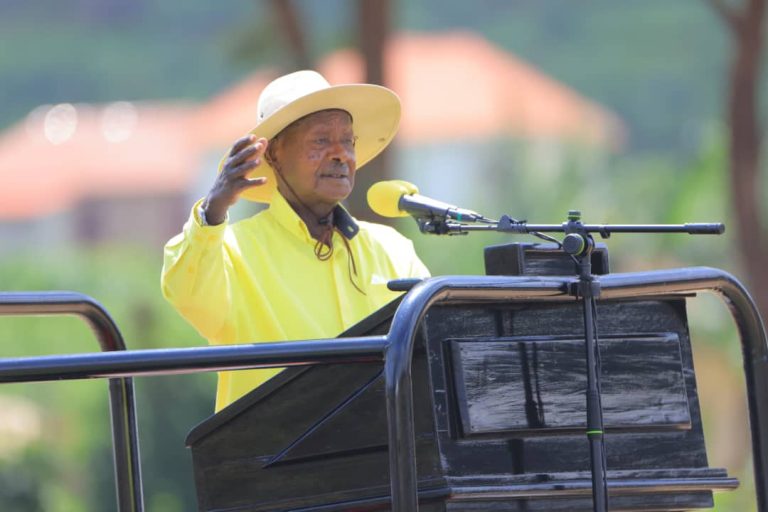
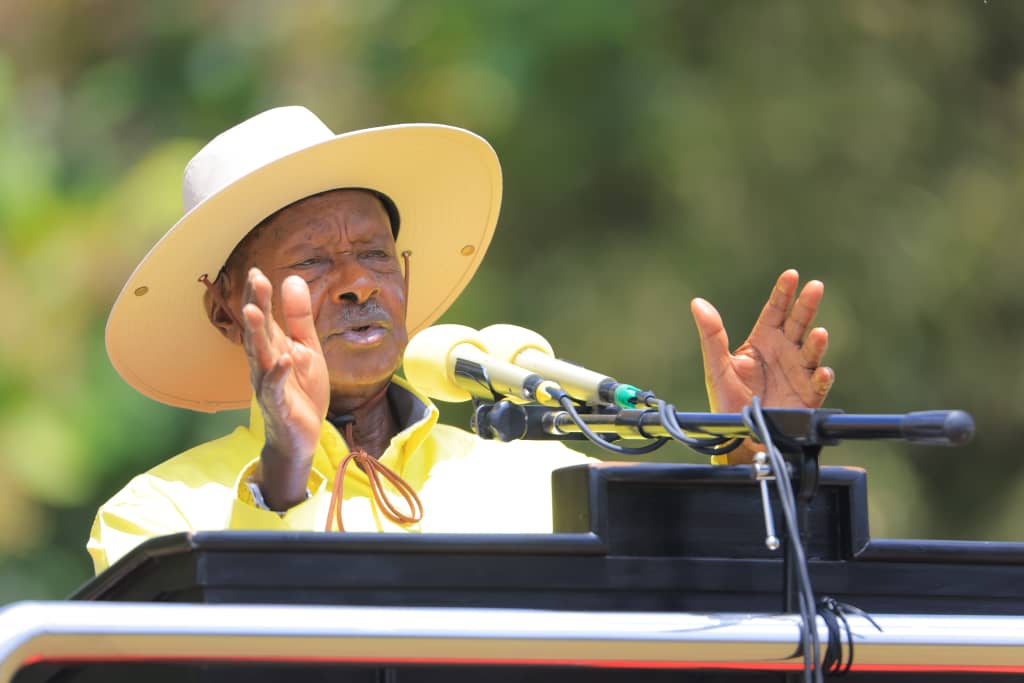
President Yoweri Kaguta Museveni has emphasized the need for Ugandans to embrace fish farming and irrigation as key wealth creation avenues, particularly for communities living around wetlands.
Speaking during his address in Serere District Headquarters as part of his six-day working visit to the Teso Sub-region, the President said the government is set to roll out a massive fish farming program along wetland edges to help families increase household incomes.

“So, from one acre, I am getting Shs140 million net after removing costs,” the President said, while illustrating how productive fish farming can be when properly managed.

“In addition to giving you money to do proper fishing, we are going to develop a massive fish farming program along the edges of wetlands. We shall also use the water for irrigation,” he added.
The President noted that the new fish farming initiative would complement existing government wealth creation programs such as the Parish Development Model (PDM), Emyooga, and the Presidential Industrial Hubs.
“If you listen to my advice, we are going to have so much money in families. We shall combine fish farming and irrigation to transform livelihoods,” he said.
Museveni reminded the people of Serere that wealth creation starts at the household level and urged Ugandans to differentiate between development and personal wealth.
“You don’t sleep on the tarmac road, create wealth,” he said, emphasizing that while the government provides public goods such as roads, schools, and hospitals, individuals must take responsibility for improving their personal income.
“Development is for the government and owned by everyone, but wealth or poverty are individual. That is why the NRM government is preaching wealth creation, but some people are not listening,” he added.
The President also committed to improving key road networks and electricity connectivity in Serere District.
He revealed that the Serere–Soroti Road will be constructed soon, describing it as a shorter and more strategic route that will ease transport between the two districts.
“On electricity, it is interesting that all sub-county headquarters in Serere have power except Olio and Kidetok Town Council,” Museveni observed, pledging that the remaining areas would be connected to the national grid to support enterprise growth.
Philip Oucor, the NRM flag bearer for Pingire County, commended the President for his consistent support to Serere District through various government programs.
He highlighted the district’s unique agricultural potential and ongoing infrastructure works.
“We are privileged because Serere hosts NaSSARI in Igola, the only cereal seed preparation center in the entire Teso region,” Oucor said.
“The roads are also under development. Construction has started from Kumi through Ngora, Serere up to Kagwara. The Soroti–Atiira–Pingire–Mugarama road is under design.”
He appealed to the President to prioritize the Ochaapa–Soroti road as a security and emergency route.
“About seven years ago, floods in Awoja cut off the main Mbale road. The Ochaapa–Soroti road was the only lifeline then. As we tarmac the Kumi–Kagwara road, that route should be annexed as a 16-kilometer security road,” he proposed.
Oucor further noted that several youth and women groups in Serere have benefited from the Emyooga, PDM, and Youth Livelihood programs.
“We already have 50 million shillings for young people skilled through industrial hubs. Each parish has received PDM funds, and these initiatives are changing lives,” he said.
He urged the government to inject more funds into NaSSARI to improve cereal seed quality and enhance the agricultural value chain for millet, sorghum, maize, and simsim.
“We want to improve our yields and safeguard our lakes so that both fishing and farming can thrive side by side,” Oucor emphasized.
Meanwhile, Michael Olobo, the NRM Chairperson for Serere County, called on President Museveni to consider the creation of Serere Municipality, Kasilo District, and Kateta County to bring services closer to the people.
“These new administrative units will help us decentralize services and improve coordination in resource management and development planning,” Olobo said.
About Author