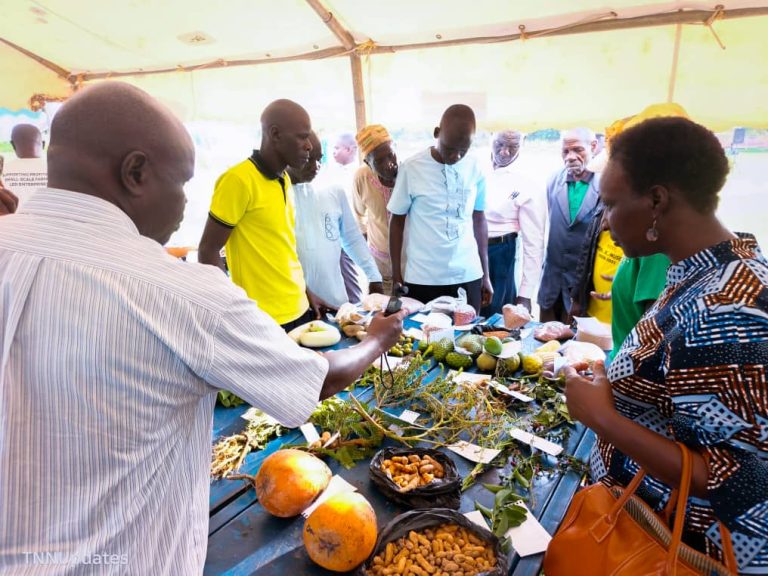
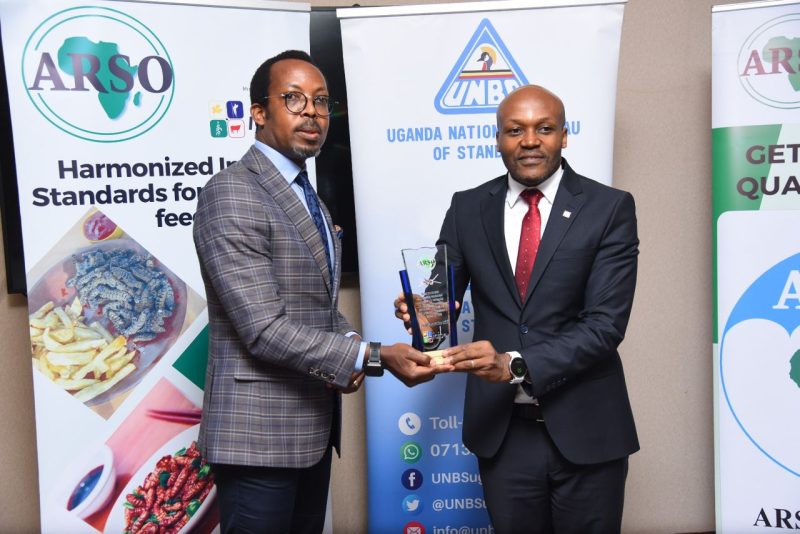
Experts from the Uganda National Bureau of Standards (UNBS) and the African Organization for Standardization (ARSO) have unveiled 15 new African Standards for Edible Insects alongside capacity-building initiatives on good farming and harvesting practices.
The move is aimed at ensuring consumer safety and boosting trade in edible insects across the continent.

The standards, launched in Kampala on September 22, 2025, cover the entire edible insect value chain, from farming and wild harvesting to processing, hygiene, packaging, safety, and regulatory frameworks.

The two-day event marked a major step forward for the rapidly growing edible insect industry, which many African countries, including Uganda, are increasingly tapping into.
In Uganda, the trade in grasshoppers, locally known as nsenene, remains a thriving business, especially in the central region where they are considered a cherished delicacy.

UNBS Executive Director Eng. James Kasigwa emphasized that standardization is crucial for ensuring consumer safety, guaranteeing product quality, building market trust, and expanding opportunities for trade.
The new standards cover a wide range of insects, including grasshoppers, locusts, crickets, bee larvae, dung beetles, termites, and white ants, providing a broad base of products that can be traded both locally and internationally.
Eng. Kasigwa further explained that with demand for animal protein rising due to population growth, urbanization, and changing dietary patterns, traditional livestock systems alone cannot sustainably meet global protein needs.
“Insects present a promising and under-utilized alternative. They are rich in proteins, vitamins, and minerals, require minimal land and water, and produce significantly lower greenhouse gas emissions,” he said.
Mr. Patrick Mugisha, Commissioner for Business Development and Quality Assurance at the Ministry of Trade, Industry and Cooperatives, said the new standards will expand Uganda’s competitiveness and business opportunities while supporting the country’s long-term growth strategy of expanding the economy from about US$50 billion in 2023 to US$500 billion by 2040.
In remarks delivered on behalf of State Minister for Trade Gen. Wilson Mbadi, Mugisha noted that edible insects are deeply embedded in Uganda’s cultural traditions, with termites and long-horned grasshoppers (nsenene) being the most commonly consumed.
“These insects are rich in protein, ranging between 35% and 60%, making them an excellent source of nutrition. Beyond human consumption, they are now being explored as substitutes for expensive raw materials in animal feed production,” he said.
Gen. Mbadi also commended ARSO and the International Centre for Insect Physiology and Ecology (ICIPE) for supporting the development of standards and building capacity to ensure their adoption.
Uganda’s edible insect sector is already showing strong growth.
In 2016, Flying Food Uganda supported 39 cricket-rearing centers, and by January 2025, more than 2,000 individual farmers and 16 community and school-based breeding centers were active across the country.
This expansion reflects the growing economic potential of the edible insect industry in driving entrepreneurship and innovation.
Uganda was also one of the first Africancountries to pioneer standards for edible insects and insect-based animal feeds, with Makerere University spearheading efforts in 2017/2018 alongside ICIPE, Kenya, and Rwanda.
Dr. Hermogene Nsengimana, Secretary General of ARSO, urged African states to put the standards into action.
“When you develop standards and don’t implement them, they remain just paper. Without implementation, they mean nothing,” he cautioned.
Dr. Jimmy Pittchar, Director of ICIPE, noted that the global edible insect market, currently valued at between US$1.35 billion and US$1.77 billion, is projected to grow to between US$4.38 billion and US$17.9 billion by 2033.
Both UNBS and ARSO pledged to support at least 200 small and medium-scale edible insect enterprises in adopting the new standards to strengthen their operations and competitiveness.
For advertising or to run your news article, contact us on 0785674642 or email tesonewsnetwork@gmail.com.
About Author