Civil society organizations have raised a red flag over the rising threats to agricultural diversity in Eastern and Northern Uganda, warning that climate change, land degradation, and unfair market pressures are pushing smallholder farmers to the edge and undermining community-led seed systems.
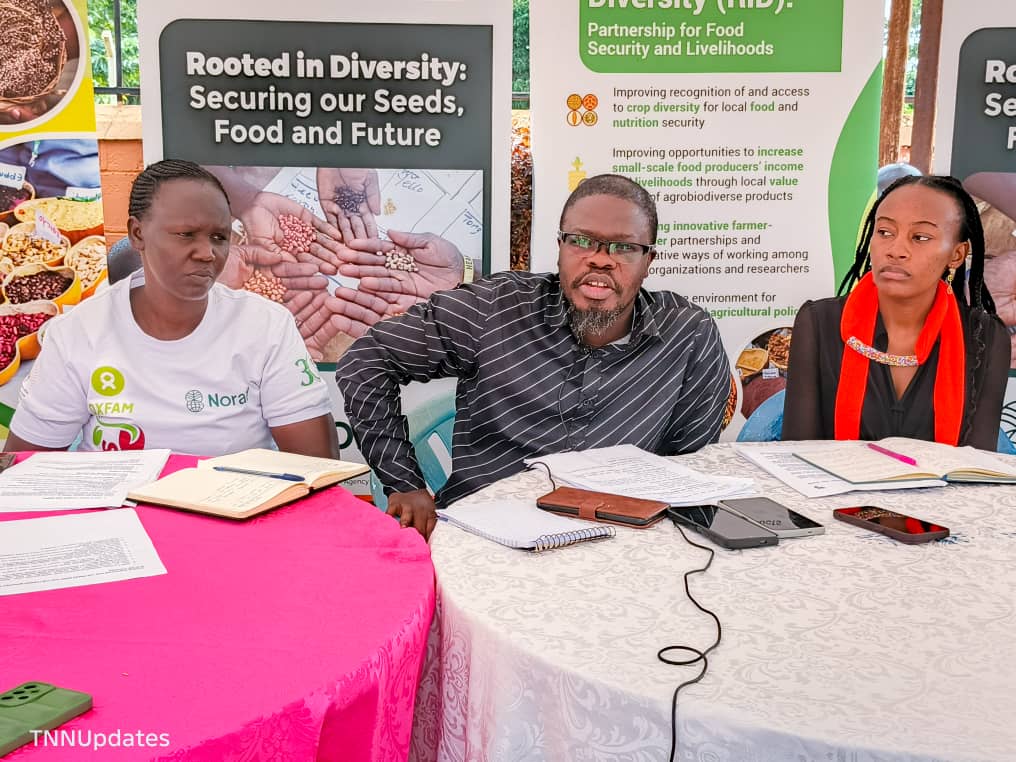
The call was made at a media briefing during the closure of the Farmer Managed Seed System (FMSS) Caravan at Akello Hotel in Soroti, organized by Oxfam, Eastern and Southern Africa Small Scale Farmers Forum (ESAFF-Uganda) and PELUM-Uganda, with support from NORAD under the Rooted in Diversity: Partnerships for Food Security and Livelihoods Project.

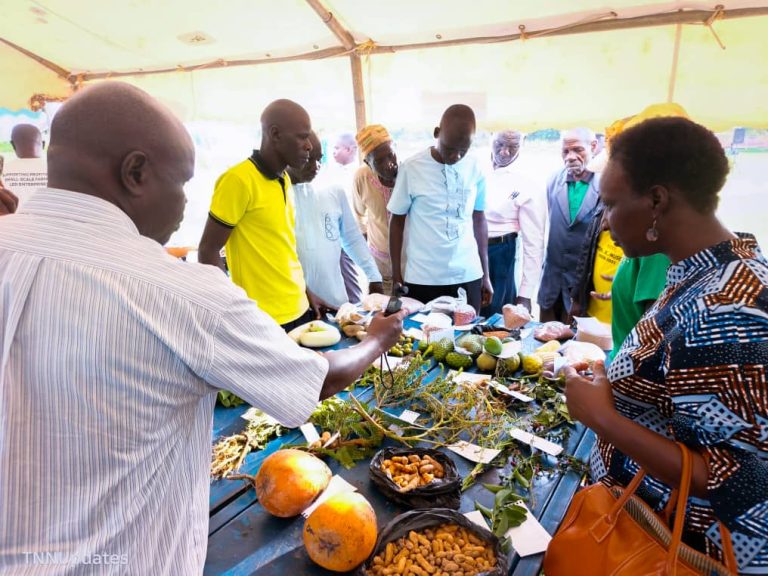
The caravan, which traversed districts such as Iganga, Serere, and Soroti, highlighted both the struggles and successes of farmers in conserving local seeds, building resilience to climate shocks, and sustaining indigenous knowledge systems amidst fast-changing agricultural and market realities.

Speaking to media, Anna Ruyondo Kabahukya, Seed Rights Coordinator at Oxfam Uganda, described the FMSS Caravan as a people-centered initiative aimed at reclaiming farmers’ role in securing food sovereignty.
“The FMSS Caravan is more than just an event, it is a movement,” Kabahukya said.

“It is a journey of learning through communities, fields, and stories; amplifying the voice of the farmer, honoring traditional knowledge, and advocating for seed sovereignty. At a time when climate change, land degradation, and market pressures threaten agricultural diversity, this caravan reminds us that the future of food lies not just in laboratories, but in the hands of farmers who are the stewards of seed, soil, and sustenance.”
Kabahukya noted that smallholder farmers across Eastern and Northern Uganda are already innovating ways to cope with these challenges.
Community seed fairs, local seed banks, and cooperative-driven selection methods have enabled many farming households to access quality seeds that are both climate-resilient and affordable.
She emphasized that while the project promotes research and innovation, farmer-led seed systems remain central to addressing hunger, inequality, and climate vulnerability.
Lawrence Kanakulya, Program Officer for Advocacy at PELUM-Uganda, called for stronger recognition of the role farmers play in seed development, likening them to scientists whose innovations often go unnoticed.
“Farmers are scientists in their own right,” Kanakulya said. “Most of the seeds that researchers breed originally come from these farmers. They select, test, and preserve seeds across generations. What they lack is not knowledge, but recognition and support.”
Kanakulya pointed out the need to srengthen farmer cooperatives to ensure fair seed governance and protect communities from biopiracy by multinational seed companies and imvesting in seed quality to counter fake or poor-performing seeds in the market that undermine farmer confidence.
He further appealed for promotion of gender equity in seed access, noting that women remain the backbone of farming but often face barriers in leadership and decision-making and ecouraging youth participation in agriculture by making access to quality seed and agricultural inputs easier.
He stressed that commercial seed companies are threatened by farmer-managed systems because they fear losing market dominance.
“This is why we must protect smallholder farmers from exploitation and instead strengthen their capacity to sustain their own food security,” he added.
Anna Sofia Asingo, Project and Advocacy Officer at Community Integrated Development Initiative (CIDI), emphasized the need to support farmer cooperatives with a focus on empowering women.
“Seed selection, preservation, and storage are often seen as women’s work,” Asingo noted.
“Yet women rarely get recognized or supported for this crucial role. Establishing and strengthening cooperatives is key, because it provides a platform where women can share knowledge, access resources, and participate in leadership.”
She explained that traditional seed preservation techniques, such as selecting the healthiest millet heads or storing maize in granaries and clay pots, are rapidly disappearing among the younger generation.
“Today’s youth have little knowledge of these indigenous practices,” Asingo lamented.
“We must find strategies to revive and promote this knowledge, because it is not only part of our heritage but also key to ensuring food security in the face of climate shocks.”
Asingo also underscored the importance of farmer-researcher partnerships, arguing that scientists should recognize local expertise.
“Farmers already know what works in their contexts. With support, they can refine these practices and strengthen seed sovereignty,” she added.
Sam Ereu, a senior researcher at the National Semi-Arid Resources Research Institute (NaSARRI), reaffirmed the importance of collaboration between scientists and farmers.
“At NARO, we recognize that farmers are central to the seed system. That is why we engage them in participatory variety selection and development,” Ereu said.
“We take local materials from farmers, improve them, and return them. But equally, we give farmers the opportunity to choose and develop varieties based on their taste, resilience, and market preference.”
Ereu highlighted that Uganda operates under two seed systems, the formal and the informal.
The formal system involves certified seed production, while the informal system is community-driven. He argued that both systems must complement rather than compete with each other.
NARO, he added, also promotes local seed businesses and facilitates knowledge sharing through training and partnerships with NGOs.
“The caravan demonstrates that collaboration is the way forward,” he concluded.
For inquiries, advertising or to run your news article, contact us on 0785674642 or email tesonewsnetwork@gmail.com.
About Author