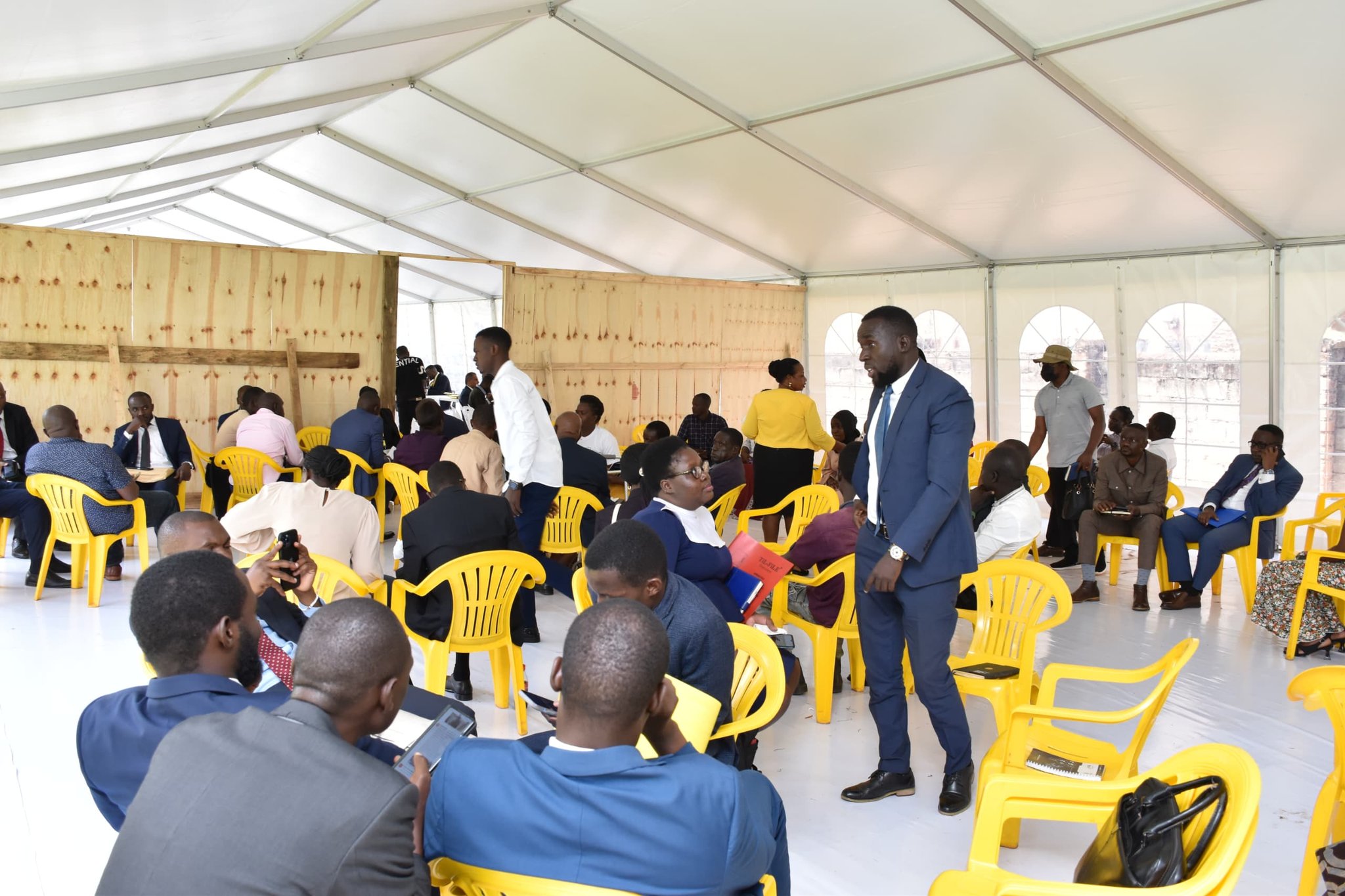
The National Resistance Movement (NRM) Electoral Tribunal yesterday heard several petitions from disgruntled party members in Teso sub-region with glaring weaknesses in the evidence presented, leaving the cases hanging in doubt.
Among the petitions scrutinized were those filed by Esther Lucy Acom against Minister Hellen Adoa (Serere Woman MP), Vincent Orena against Simon Peter Opolot (Kanyum County), and Julius Enyeku against Abraham Isamat (Kapir County), among others.

In what was described as a major setback for the petitioners, their were uncovered significant irregularities in the petition lodged by Acom against Minister Adoa.

One of the key findings was that Acom had mistakenly presented results from the 2015 party primaries as part of her evidence in a case meant to contest the 2025 primaries.
Several Members present questioned how such outdated data could be admissible in determining the credibility of a current electoral process.
Further compounding Acom’s case was her inability to substantiate allegations of election malpractice, which included claims of poll violence, voter bribery, and falsification of results.
According to sources close to the Tribunal, the evidence provided was insufficient to meet even the minimal threshold required for a substantive review.
Addressing journalists shortly after the hearing at the NRM headquarters, Minister Hellen Adoa expressed shock at the Petition and dismissed the petition as meritless.
“I am stunned that such a petition could even be filed. From 2016, 2021, and now 2025, my vote count has been consistent. This clearly shows that the people of Serere have always trusted me. The few votes Acom received were largely from Alice Alaso’s supporters, who have long opposed me,” Adoa remarked.
She went further to suggest that Acom’s recent recruitment into the NRM’s “yellow book” may have been an opportunistic move to gain political mileage within the party.
Despite the sharp criticisms, Acom stood her ground.
She maintained that she had valid reasons for filing her petition and called for calm among her supporters as they await the Tribunal’s formal decision.
“I believe my petition was grounded in legitimate concerns. I urge my supporters to stay patient and calm as we follow through the due process,” Acom stated.
A similar scenario played out in Kanyum County where Vincent Orena challenged incumbent MP Simon Peter Opolot. Orena accused Opolot of voter bribery, claiming that coupons for sheep distributed during the campaigns were linked to him.
However, Orena failed to provide concrete proof tying Opolot directly to the alleged bribery.
In a surprising twist, the photographic evidence Orena presented was of his own agents holding the coupons, sparking suspicion of possible foul play or self-incrimination within his camp.
Opolot, unshaken by the allegations, defended his record and pointed to his consistent electoral performance since 2016.
“The results speak for themselves. My electoral numbers have remained steady over the years, which is a testament to the confidence and trust the people of Kanyum have in me,” Opolot confidently told the media.
In Kapir County, Julius Enyeku’s petition against Abraham Isamat also faltered, with the Tribunal finding that his claims of electoral irregularities could not be proven beyond reasonable doubt.
After the session, Enyeku addressed his supporters, pledging to remain steadfast despite the Tribunal’s position.
“I will not abandon the people of Kapir. Whether or not the Tribunal rules in my favor, I will continue to stand by them and fight for their political voice,” he vowed.
The NRM Tribunal has since announced that formal rulings on all the petitions heard will be delivered within two to seven days.
Party insiders say the outcomes will be crucial in either reinforcing the incumbents’ positions or reopening internal rifts within the Teso NRM fraternity.
Political observers argue that the hearings underscore a growing trend of intra-party disputes within the NRM as members jostle for influence ahead of the 2026 general elections.
While internal petitions are a sign of democratic practice, they also reveal deep-seated rivalries that could weaken party cohesion if left unresolved.
For now, the focus shifts to the Tribunal’s pending verdicts, which are expected to provide clarity and possibly bring closure to a series of petitions that have left the NRM’s Teso sub-region wing politically tense and divided.
About Author