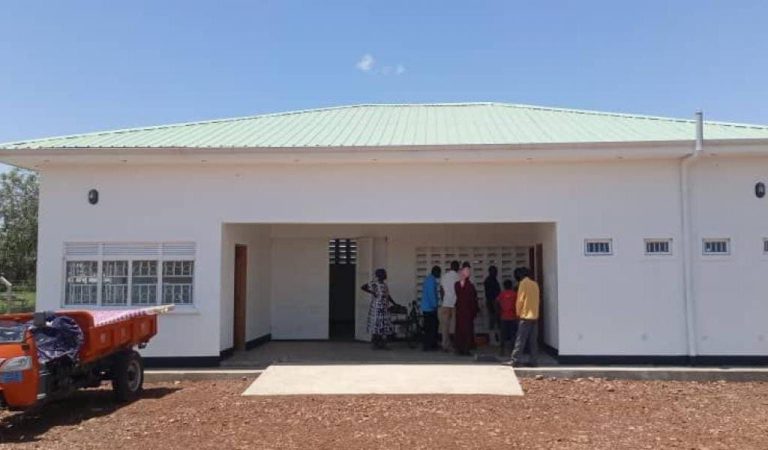

The Community Integrated Development Initiative (CIDI) has officially commissioned the Awaliwal Youth Training Centre in Soroti District.
The modern, multi-million shilling facility will serve as a dedicated hub for training teenage mothers and school dropouts in practical, income-generating skills aimed at combating poverty, early marriage, and unemployment among the region’s most at-risk groups.

The colourful commissioning event drew local leaders, community members, representatives from Denmark and Germany, and scores of beneficiaries whose lives have already been transformed by CIDI’s work.

With financial support from Seniors Without Borders Denmark, the centre symbolizes not just a building but a promise of hope for marginalized youth across Teso.
Located in Awaliwal Sub-county, the new training centre boasts classrooms, workshops, and demonstration areas designed to deliver hands-on training in trades such as carpentry and joinery, shoemaking, hairdressing, catering, tailoring, soap making, bricklaying and concrete practice, as well as sweater knitting.

Addressing the gathering, CIDI Soroti Regional Team Leader, Lukanga Musisi Samuel, described the commissioning as a dream realized after years of operating in rented premises and make-shift workshops.
“With the kindness and generosity of our partners in Denmark, today we celebrate a permanent facility here in Awaliwal that will ease and enhance the training process,” he said to applause.
“This is not just a milestone for CIDI but for the entire community. It will serve as a catalyst for reducing teenage pregnancies, early marriages, and poverty.”
He noted that over 380 youth had already benefitted from CIDI’s training programmes over the past four years despite challenges of space, limited furniture, and equipment shortages.
“With this new home, we will be able to admit more learners and improve the quality of training,” he added, while appealing to government to take ownership of such initiatives and integrate them into broader national development plans.
The facility was constructed with major financial backing from Seniors Without Borders Denmark, an international development partner committed to supporting vulnerable communities in Uganda.
The event was graced by a Danish delegation and Paul, a German representative of the partner organization, both of whom reaffirmed their commitment to helping Uganda’s underserved youth.
In his address, Paul shared the deeply personal motivation behind the partnership.
“Eight years down the road, I have been surveying Soroti, searching for ways to help. I discovered that teenage mothers and school dropouts were being left behind. That is when I decided to begin training them with life-changing skills,” he explained.
Paul emphasized that the vision is to turn these young people into job creators, not job seekers, so they can support themselves, their families, and their communities.
He also lauded the local community for its cooperation and resilience, and expressed hope that the partnership would continue to grow in future.
Local leaders, district officials, and CIDI trainers used the occasion to rally the community to embrace vocational training as a solution to endemic problems such as youth unemployment, poverty, and early marriage.
According to recent reports, Teso sub-region has one of the highest rates of teenage pregnancy and school dropout in Uganda.
Poverty, cultural practices, limited access to secondary education, and lack of opportunities for practical skills development have all contributed to the crisis.
Rukanda Msisi Samuel did not mince words about the scale of the problem, urging government and local leaders to prioritize vocational training and youth empowerment in development plans.
“We cannot continue losing our children to early marriage, pregnancy, and crime simply because there are no opportunities. This centre is our answer, but it cannot be the only one. Government must build upon what CIDI and its partners have started here,” he said.
He highlighted the specific challenges facing the centre, including limited furniture, shortage of bricklaying and carpentry equipment, and the persistent problem of early youth marriages that interrupt training.
“We need to work together as a community to keep our youth in training. Parents must support them, and leaders must champion their cause,” he added.
CIDI has also been supporting feeding programmes at Awaliwal and Amoroto Primary Schools.
This, Msisi said, is part of the organization’s holistic approach to tackling school dropout.
“The main cause of school dropout is the hostile learning environment. Imagine studying all day without food. With this feeding support, we aim to retain more pupils and prevent them from dropping out early,” he explained.
He thanked the district and sub-county authorities for donating land for the centre’s construction and urged continued collaboration to ensure the sustainability of such programmes.
Perhaps the most moving part of the ceremony came from the testimonies of former trainees whose lives had been turned around thanks to CIDI’s programmes.
William Edopu, once a notorious drunkard and dropout from Aukot, took the stage to share his journey of transformation.
“I used to engage in evil deeds, drinking, fighting. But through this initiative, I discovered my talent in shoemaking,” he said, drawing cheers from the crowd. “Now, I support myself and my family.”
Edopu explained how he had mobilized his peers into savings groups, motivated other youth to join the training, and eventually earned the trust of local leaders to become a sub-county youth leader.
“This centre is proof that change is possible,” he told the audience. “It saved my life.”
Another beneficiary, Abiro Salume, a teenage mother, offered an emotional account of her struggles and triumphs.
“I lost all hope after dropping out of school and facing rejection from my family,” she began tearfully.
“My mother sold a chicken just so I could join CIDI. Though I lost her before finishing my training, CIDI stood by me. Today, I run a tailoring workshop and can support myself.”
She encouraged other girls in similar circumstances to seize such opportunities rather than resigning themselves to poverty or abuse.
Local leaders in Awaliwal Sub-county commended CIDI for its commitment to youth empowerment.
They praised the modern classroom block and workshop spaces as a landmark achievement for the area.
“We want to thank CIDI and its international partners for not just talking about youth empowerment but actually doing something concrete,” said one sub-county councillor at the event.
“This centre will help us reduce crime, early marriage, and unemployment.”
The leaders pledged to continue working with CIDI to ensure the success of the centre and called for more support from other development partners, government ministries, and civil society organizations.
They also appealed to parents and guardians to allow their children, especially girls, to attend training, rather than marrying them off early or forcing them into exploitative labour.
About Author