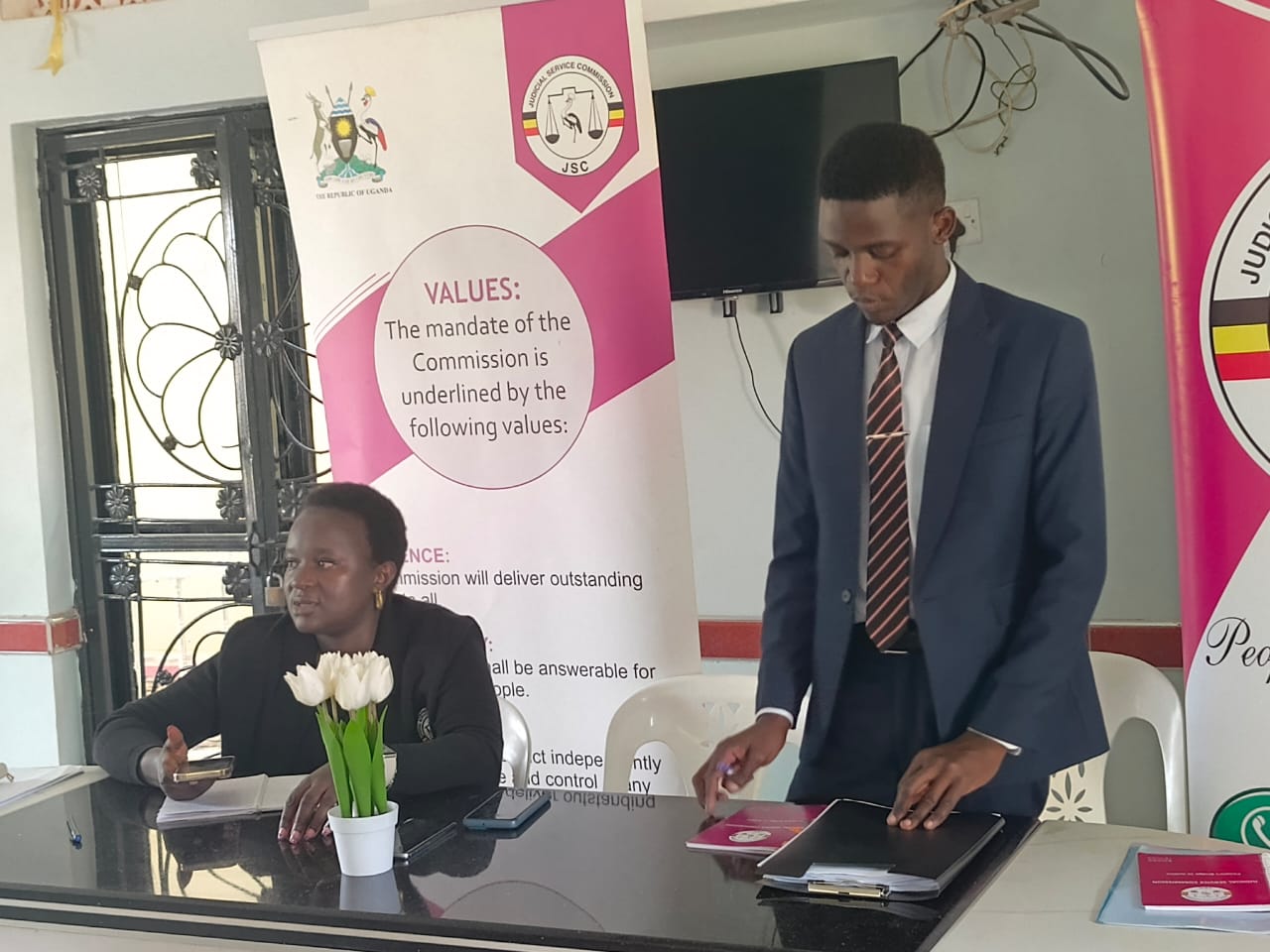
The Judicial Service Commission (JSC), a government established body headquartered at Kingdom Kampala with other regional offices in Masaka, Moroto, and Mbarara, is spearheading a nationwide effort to educate the public on legal matters and the administration of justice.
Speaking to the media at Amen guesthouse Soroti city, David Wandera, Legal Officer at JSC, emphasized the Commission’s core responsibilities which include the recruitment and appointment of both judicial and non judicial officers, handling disciplinary cases within the judiciary, conducting legal research, and informing the government on how to enhance justice delivery.

In a move to strengthen the legal knowledge base across Uganda, the JSC is currently engaging all districts through legal education programs aimed at enlightening citizens about how the law operates.

These programs are complemented by publications such as the Citizen Handbook and informative brochures addressing legal topics including sex and domestic violence.
Wandera highlighted the critical issue of case backlog, attributing it to factors such as limited judicial personnel, high crime rates, absenteeism of legal actors (including witnesses and lawyers), and limited public understanding of the law.
The JSC seeks to address this through disciplinary action against judicial officers where warranted, as well as introducing alternatives like Alternative Dispute Resolution (ADR), mediation, reconciliation, plea bargaining, and the expansion of judicial infrastructure.
“When we receive a complaint from citizens about corruption or miss conduct of the case, we investigate it thoroughly. If there is credible evidence, we give the accused an opportunity to defend themselves before any penalties are issued,” Wandera explained.
To ensure transparency and accountability in courts, the JSC also carries out compliance checks and urges the public to report cases of corruption directly to the Commission.
Wandera cautioned against spreading misinformation and unfounded allegations against judicial officers, which undermines public trust in the justice system.
He further called on the media to work closely with the JSC in promoting legal awareness.
“The media is a powerful tool for reaching the public. Through talk shows, publications, and respectful court coverage, the media can help educate Ugandans about the law,” he noted.
Wandera advised journalists to understand court procedures and seek necessary permissions when reporting on court cases.
“Not all proceedings are open for coverage. Media professionals must be respectful, build rapport with judicial officers, and always report responsibly. You are the voice of the people, but you must also protect yourself from legal repercussions,” he added.
The JSC remains committed to delivering justice to all Ugandans and continues to innovate in the fight against case backlog and judicial inefficiencies through education, reform, and strategic partnerships including with the media.
About Author