
By Emmanuel Olinga
Uganda’s Vice President, Maj. (Rtd) Jessica Rose Alupo Epel, has voiced concern over what she described as a deliberate campaign to undermine her development efforts in the Teso sub-region.

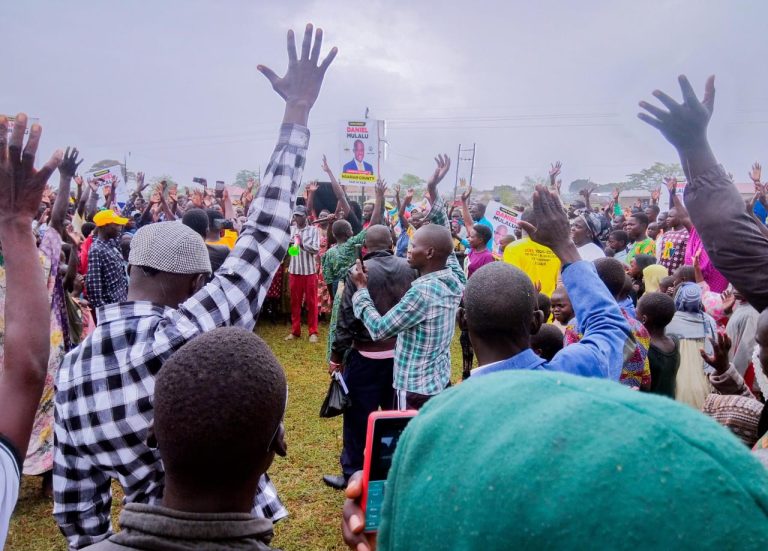
Alupo made the remarks on Wednesday while addressing residents of Akalele village in Angodingod sub-county, Katakwi District, where she accused unnamed individuals, some within senior government ranks, of actively fighting her progress.

Speaking with a mix of resolve and emotion, Alupo alleged that the opposition to her initiatives stems from jealousy and political rivalry linked to her current role as Vice President and her track record in pushing for major development projects in the region.
“I am being fought,” Alupo declared, “by external forces working with some of our own Iteso in high positions who are against progress for our people.”

According to Alupo, the latest point of contention is the planned construction of a super-specialized hospital in Katakwi, a project she says is being opposed by individuals who prefer the facility to be built in their own districts instead.
The Vice President drew parallels between the current opposition to the Katakwi hospital project and the political backlash she faced in 2016 when she spearheaded the establishment of Soroti University of Science and Technology during her tenure as Minister of Education and Sports.
“These are the same people who fought me in 2016 when we brought Soroti University,” Alupo said. “Now they’re doing it again because they don’t want Katakwi to benefit from a modern hospital.”
She noted that the resistance to development projects in Teso is not new and appears to be orchestrated by a well-connected group of political actors determined to sideline her and suppress development in the region.
Despite the political hurdles, Vice President Alupo reiterated the government’s commitment to construct two modern, fully-furnished specialized hospitals, one in Katakwi and another in Lwengo. These health facilities are to be developed with support from U.S.-based partners and are designed to address the growing burden of non-communicable diseases in underserved areas.
“President Yoweri Museveni personally endorsed this plan in a letter dated February 1, 2024. These hospitals are part of a national effort to decentralize specialized health care,” Alupo explained.
Katakwi and Lwengo were selected based on assessments indicating a dire need for specialized medical services, particularly in handling chronic and non-communicable illnesses.
“This is not about politics. It’s about saving lives and giving people in rural areas access to modern health care,” she emphasized.
Alupo called on the people of Teso to remain vigilant and united in the face of what she termed as “development haters.”
She encouraged them to resist divisive politics and continue supporting leaders who are committed to delivering tangible improvements in health, education, and infrastructure.
“Let us condemn these haters of progress who don’t want Ateker to rise,” Alupo told a cheering crowd. “Our region deserves better health care, and we will not be intimidated.”
In her address, she also reminded the public that development is not about personal benefit but collective advancement for communities that have long been marginalized.
Alupo’s comments come at a time when Uganda’s political landscape is beginning to take shape ahead of the 2026 general elections.
With Alupo’s stature as Vice President and her role in lobbying key projects for Teso, the resistance she faces may also be reflective of broader intra-party rivalries within the ruling National Resistance Movement (NRM).
About Author